



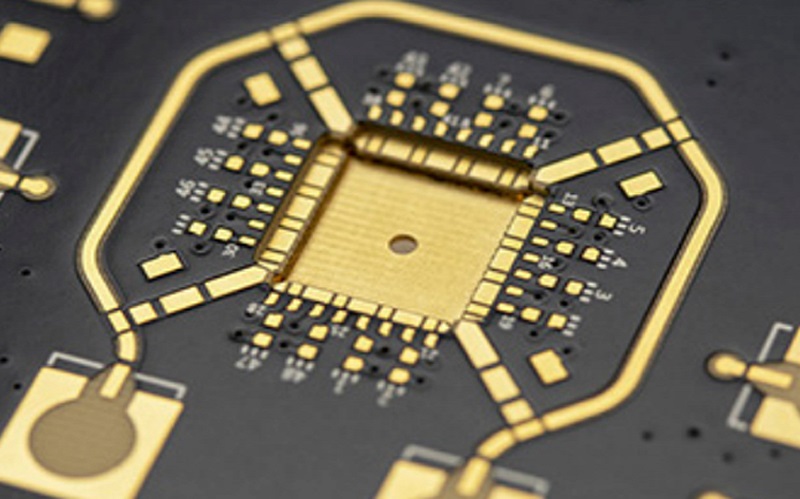
A. Real Engineering Challenges in HDI Material Selection
High density interconnect designs suffer consistent failures from improper material matching:
- Standard FR4 used in 25Gbps designs creates 30–40% excess insertion loss
- CTE mismatches between core and buildup layers cause 22% of microvia cracking
- Over‑specifying premium low‑loss materials increases cost by 50–80% unnecessarily
- Inconsistent Dk values lead to impedance shifts beyond ±5% tolerance
- Laser drill incompatibility extends lead times by 5–10 days for small vias
- Moisture absorption above 0.15% causes delamination during 260°C lead‑free reflow
This guide organizes all HDI‑grade materials by performance tier, application, and frequency for fast, accurate selection.
Learn more about :How to Choose HDI PCB Stackup for Your Project
B. HDI PCB Materials – Full Classification by Category
1. Standard & Cost‑Effective General‑Purpose Materials
FR4 (Standard Grade)
- Electrical (10GHz): Dk 3.8–4.2, Df 0.010–0.020
- Thermal: Tg 130–150°C, Td 340–360°C
- HDI Capability: 3–4mil trace/space, 6–10mil microvias
- Best For: Consumer electronics, IoT, sensors, ≤10Gbps
- IPC Standard: IPC‑4101, IPC‑6012 Class 2
High‑Tg FR4
- Electrical (10GHz): Dk 3.7–4.0, Df 0.008–0.015
- Thermal: Tg ≥180°C, Z‑CTE ≤70 ppm/°C
- HDI Capability: Sequential lamination, stacked microvias
- Best For: Automotive, industrial, ADAS, multiple reflow cycles
- IPC Standard: IPC‑6012 Class 3
2. Mid‑Range High‑Speed Low‑Loss Materials
FR408HR
- Electrical (10GHz): Dk 3.48–3.67, Df 0.0093–0.0098
- Thermal: Tg 180°C
- HDI Capability: 4mil dielectric, via‑in‑pad compatible
- Best For: 10–25Gbps Ethernet, PCIe 4.0, general high‑speed HDI
- Value: Balanced performance and cost
Isola I‑Speed
- Electrical (10GHz): Dk 3.45–3.55, Df 0.0059
- Thermal: Tg 180°C
- HDI Capability: 2mil thin dielectrics, laser drill optimized
- Best For: 25–50Gbps, SerDes, 5G small cells
- Value: Strong loss performance at lower cost than PTFE materials
3. Ultra‑Low‑Loss High‑Frequency Materials
Rogers 4350B
- Electrical (10GHz): Dk 3.48 (stable to 40GHz), Df 0.0017
- Thermal: Tg 180°C, moisture ≤0.06%
- HDI Capability: 4–8mil microvias, tight impedance control
- Best For: RF, microwave, 5G mmWave, ≥25Gbps
- Value: Industry benchmark for high‑reliability low loss
I‑Tera MT40
- Electrical (10GHz): Dk 3.18–3.32, Df 0.0023–0.0028
- Thermal: Tg 180°C, Z‑CTE 65 ppm/°C
- Best For: Precision impedance HDI, medical, automotive radar
- Value: Excellent stability for differential pairs
Astra MT77
- Electrical (10GHz): Dk 2.95–3.01, Df 0.0017–0.0019
- Thermal: Tg 200°C, low CTE
- Best For: 60–100GHz, AiP, mmWave HDI modules
- Value: Extremely low Dk for high‑frequency performance
Tachyon‑100G
- Electrical (10GHz): Dk 2.98–3.05, Df 0.0014–0.0017
- Thermal: Tg 185°C
- Best For: 100Gbps+ transceivers, data center, HPC
- Value: Optimized for 100G+ Ethernet and optical links
4. Premium High‑Performance Panasonic Megron Series
Megron 6 / R5775
- Electrical (10GHz): Dk 3.37–3.61, Df 0.004
- Thermal: Tg 180°C
- Best For: PCIe 5.0, 25–50Gbps, enterprise servers
- Manufacturing: Laser‑optimized for high‑volume HDI
Megron 7
- Electrical (10GHz): Dk 3.2–3.3, Df 0.003
- Thermal: Tg 200°C
- Best For: 60Gbps, cloud computing, high‑speed switches
- Value: Low fiber‑weave effect for impedance consistency
Megron 8
- Electrical (10GHz): Dk 3.0–3.1, Df 0.0025
- Thermal: Tg 220°C
- Best For: 120Gbps+, AI accelerators, next‑gen HPC
- Value: Near‑zero Dk drift up to 40GHz
C. Key Material Comparisons for HDI
FR4 vs. Rogers 4350B
| Aspect | FR4 | Rogers 4350B |
|---|---|---|
| Dk (10GHz) | 3.8–4.2 | 3.48 |
| Df (10GHz) | 0.01–0.02 | 0.0017 |
| Tg (°C) | 130–150 | 180 |
| Insertion Loss (20GHz) | 0.4–0.5dB/inch | 0.2dB/inch |
| Laser Drillability | Good (6–10mil) | Excellent (4–8mil) |
| Cost Factor | 1x | 2.5–3x |
| HDI Application | ≤10Gbps, consumer electronics | ≥25Gbps, RF/microwave |
| IPC Compliance | IPC-4101 Class 2 | IPC-4104 Class 3 |
Megron 7 vs. Tachyon-100G
| Aspect | Megron 7 | Tachyon-100G |
|---|---|---|
| Dk (10GHz) | 3.2–3.3 | 2.98–3.05 |
| Df (10GHz) | 0.003 | 0.0014–0.0017 |
| Tg (°C) | 200 | 185 |
| Max Frequency | 60GHz | 120GHz |
| CTE (X/Y) | 13 ppm/°C | 12–14 ppm/°C |
| Trace Width (50Ω) | 4.0mil | 3.8mil |
| Ideal HDI Use Case | 60Gbps Ethernet, enterprise | 100Gbps+ AI, HPC |
Megron Series (6/R5775, 7, 8)
| Series | Dk (10GHz) | Df (10GHz) | Tg (°C) | Max Frequency | CTE (X/Y) | HDI Trace Width (50Ω) | IPC Compliance |
|---|---|---|---|---|---|---|---|
| Megron 6/R5775 | 3.37–3.61 | 0.004 | 180 | 30GHz | 14 ppm/°C | 4.2mil | IPC-4101 |
| Megron 7 | 3.2–3.3 | 0.003 | 200 | 60GHz | 13 ppm/°C | 4.0mil | IPC-4104 |
| Megron 8 | 3.0–3.1 | 0.0025 | 220 | 120GHz | 12 ppm/°C | 3.8mil | IPC-4104 |
D. Key Material Comparison Table (For Quick Selection)
| Material | Dk @10GHz | Df @10GHz | Tg | Speed Range | Best HDI Application |
|---|---|---|---|---|---|
| Standard FR4 | 3.8–4.2 | 0.010–0.020 | 130–150°C | ≤10Gbps | Basic IoT, consumer |
| High-Tg FR4 | 3.7–4.0 | 0.008–0.015 | ≥180°C | ≤15Gbps | Automotive, industrial |
| FR408HR | 3.48–3.67 | 0.0093–0.0098 | 180°C | 10–25Gbps | General high-speed |
| Isola I-Speed | 3.45–3.55 | 0.0059 | 180°C | 25–50Gbps | 5G, SerDes |
| Rogers 4350B | 3.48 | 0.0017 | 180°C | ≥25Gbps | RF, microwave |
| I-Tera MT40 | 3.18–3.32 | 0.0023–0.0028 | 180°C | 25–50Gbps | Precision impedance |
| Astra MT77 | 2.95–3.01 | 0.0017–0.0019 | 200°C | 60–100GHz | mmWave, AiP |
| Tachyon-100G | 2.98–3.05 | 0.0014–0.0017 | 185°C | 100Gbps+ | Optical, HPC |
| Megron 6 | 3.37–3.61 | 0.004 | 180°C | 25–50Gbps | Servers, PCIe 5.0 |
| Megron 7 | 3.2–3.3 | 0.003 | 200°C | 60Gbps | Cloud, switches |
| Megron 8 | 3.0–3.1 | 0.0025 | 220°C | 120Gbps+ | AI, next-gen HPC |
Learn more about: How to Calculate Impedance for HDI Boards
E. Real HDI Factory Case Study: Material Matching
12‑Layer HDI for 50Gbps Data Center Module
- Structure: 2+8+2 buildup HDI
- Original Issue: Mixed FR4 + Rogers 4350B caused CTE mismatch and 28% via failure
- Correction: Grouped materials by thermal and electrical class:
- Core: High‑Tg FR4 (matched CTE)
- Signal layers: Megron 7
- High‑speed lines: Tachyon‑100G
- Result:
- Impedance: 50Ω ±2.1%
- Insertion loss improved by 32%
- Yield improved from 71% to 93%
- Zero via failures after 1,000 thermal cycles
F. Common Design Errors from Production View
- Mixing high‑CTE and low‑CTE materials in one stackup causes microvia cracking.
- Using ultra‑low‑loss materials (Rogers 4350B, Astra MT77) for low‑speed signals wastes budget.
- Ignoring Dk stability across frequency leads to failed impedance testing.
- Using standard FR4 for >10Gbps designs creates unacceptably high insertion loss.
- Skipping prepreg drying before lamination causes blistering and delamination.
G. FAQ
- Which materials are best for cost‑sensitive HDI PCB prototypes? FR4 and High‑Tg FR4 are ideal for ≤10Gbps prototypes, balancing cost and HDI manufacturability.
- What materials should I use for 5G mmWave HDI boards? Rogers 4350B and Astra MT77 provide the low Dk/Df and stability required for 60–100GHz operation.
- Which material series is optimized for AI and 100Gbps+ HDI? Megron 7, Megron 8, and Tachyon‑100G are engineered for ultra‑high‑speed, low‑loss performance.
- How do I select materials to avoid microvia failure? Match CTE values within 3 ppm/°C and use High‑Tg FR4 or better for sequential lamination.
If you need professional HDI PCB design support or quotation, our team provides free DFM check and fast turnaround.

![Understanding PCB Costs & Pricing [Your Complete Guide]](https://hdicircuitboard.com/wp-content/uploads/elementor/thumbs/Understanding-PCB-Costs-Pricing-Your-Complete-Guide-qzzhe6mcaxuolkux3xalfktgavumi9y1aqfbs9bpv4.webp "Understanding PCB Costs & Pricing [Your Complete Guide]")