







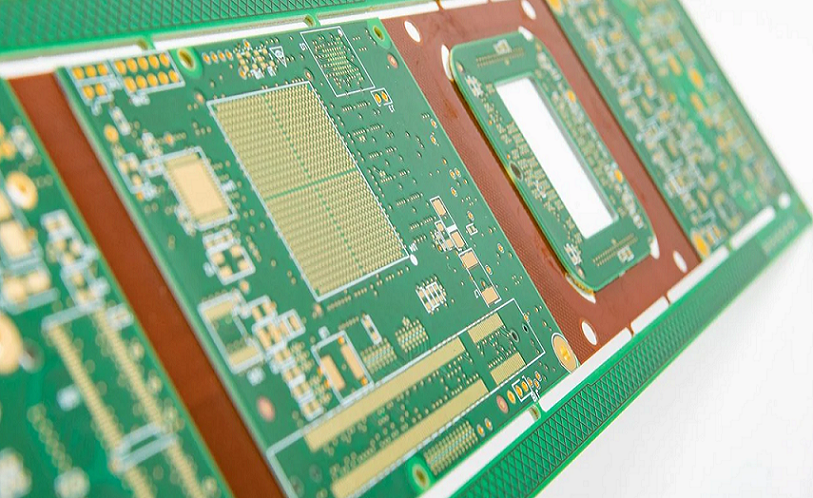
Rigid-flex PCB integrates rigid FR‑4 sections and flexible polyimide layers into a monolithic interconnection system, classified by IPC‑6013 standards and mechanical structure to support miniaturization, high reliability and 3D assembly across industries. Each type follows defined layer counts, materials, via structures and bend performance, enabling engineers to select optimal configurations for aerospace, medical, automotive and consumer electronics. This guide covers official IPC types, structural variants, applications, factory parameters, real cases and design rules for production‑ready rigid‑flex circuit boards.
Learn more about: What is Rigid-Flex PCB? A Complete Guide
Common Types of Rigid‑Flex PCBs
| IPC Type | Layer Structure | Interconnection | Typical Use |
|---|---|---|---|
| Type 1 | Single‑sided flex | No PTH | Simple links |
| Type 2 | Double‑sided flex | Through vias | Dual‑sided circuits |
| Type 3 | Multilayer flex | Buried vias | High density |
| Type 4 | Rigid + flex hybrid | Multi‑via system | Full rigid‑flex |
According to IPC‑6013 Standards
IPC‑6013 defines four standardized types for flexible and rigid‑flex circuits, with Type 4 dedicated to rigid‑flex constructions. Each type specifies layer arrangement, interconnection method and functional scope for consistent manufacturing and performance validation.
Single Sided Flex
Single conductive copper layer on polyimide film, with coverlay insulation and no plated through holes. Used for simple signal links in low‑density rigid‑flex hybrids.
- Copper thickness: 12–18 μm rolled annealed (RA) copper
- Substrate: 25–50 μm polyimide (PI)
- Application: Low‑speed signal paths, auxiliary circuits
Double Sided Flex
Two conductive layers separated by PI film, connected by plated through holes (PTH). Forms the base for dual‑sided rigid‑flex sections.
- Via diameter: 0.3–0.8 mm
- Line width/spacing: 75–100 μm
- Impedance control: ±10% for basic signal paths
Multi‑layer Flex
Three or more flexible conductive layers with alternating PI dielectric, interconnected by PTHs and buried vias. Delivers high wiring density for complex rigid‑flex core structures.
- Layer count: 4–8 flex layers
- Microvia capability: 0.15–0.2 mm laser vias
- Dielectric thickness: 25 μm per layer
Multi‑layer Rigid and Flex
Official rigid‑flex classification: combines rigid FR‑4 layers and flex layers in one laminated structure, with PTHs crossing both regions. The industrial standard for high‑performance rigid flex PCB.
- Rigid layers: FR‑4, 0.8–1.6 mm thick
- Flex layers: 2–4 internal PI layers
- Vias: Blind, buried and through vias allowed
- Compliance: IPC‑6013 Class 2 / Class 3
Learn more about: What is a Rigid-Flex PCB? Design & Manufacturing Best Practices
Based on Structural Design
Traditional Rigid‑Flex
Symmetrical stackup with flex layers centered between outer rigid boards. Most widely used for balanced stress distribution and high production yield.
- Layer ratio: 2 rigid + 2–4 flex + 2 rigid
- Bend radius: 10× flex thickness (static)
- Application: General industrial, consumer electronics
Asymmetrical Rigid‑Flex
Flex layers placed on one or both outer surfaces of rigid cores, ideal for limited vertical space and surface mounting.
- Stack: Rigid + flex + rigid or flex + rigid + flex
- Profile thickness: ≤1.2 mm
- Risk: Lower structural rigidity; requires stiffeners
Rigid‑Flex with Airgap
Unbonded flex layers with a small air gap to allow independent sliding during 180° folding, used in bookbinder and hinge designs.
- Gap height: 0.1–0.3 mm
- Flex length: Staggered layer lengths
- Benefit: Zero internal shear stress during folding
Rigid‑Flex with Heat Sink
Integral metal core or aluminum heat‑spreader layers in rigid sections for high‑power components.
- Thermal conductivity: ≥200 W/m·K
- Temperature reduction: 20–40°C at rigid sections
- Application: Automotive power, LED drivers
Rigid‑Flex with Stiffener
Local FR‑4 or PI stiffeners attached to flex zones for component mounting or ZIF connector areas, balancing flexibility and mechanical strength.
- Stiffener thickness: 0.2–1.0 mm
- Materials: FR‑4, PI, stainless steel
- Function: Prevent flexing under components
Learn more about: What is a Rigid-Flex PCB? Construction, Advantages, Applications & Design Guide
Common Applications
Aerospace & Defense
Rigid‑flex circuits provide lightweight, shock‑resistant interconnects for avionics, satellites and military equipment.
- Requirements: IPC‑6013 Class 3, −55°C to +125°C, 20G vibration
- Structures: Symmetrical 6–12 layer Type 4, airgap hinge designs
- Materials: Low‑CTE PI, high‑Tg FR‑4
Medical Devices
Biocompatible, sterilizable rigid‑flex for imaging, surgical tools and portable diagnostics.
- Compliance: ISO 13485, autoclave 134°C
- Structure: Ultra‑thin 4–6 layer Type 4
- Features: Gold plating, low‑outgassing materials
Consumer Electronics
Foldable displays, wearables, cameras and smartphones use compact rigid‑flex for space savings.
- Bend cycles: 50,000+
- Thickness: ≤0.8 mm
- Type: Asymmetrical and airgap rigid‑flex
Automotive Systems
ADAS, infotainment, battery management and powertrain modules rely on high‑reliability rigid‑flex.
- Standard: AEC‑Q100 Grade 1
- Temperature: −40°C to +150°C
- Structure: Symmetrical Type 4 with heat sinks
Key Design Considerations
| Design Item | Static Bend | Dynamic Bend |
|---|---|---|
| Min Bend Radius | 10× thickness | 50–100× thickness |
| Max Flex Layers | 8 | 2 |
| Copper Type | ED or RA | RA only |
| Coverlay | PI coverlay | PI coverlay only |
Bendability
Bend performance defines rigid‑flex type selection and service life.
- Static bend (install only): 10× flex thickness
- Dynamic bend (repeated): 50–100× flex thickness
- Max layers for dynamic flex: 2 flex layers
- Forbidden: Vias, pads and components in bend zones
Flex Layers
Layer count and arrangement directly influence flexibility and reliability.
- Max dynamic flex layers: 2
- Static flex layers: up to 8
- Copper type: RA copper for dynamic; ED copper for static
- Trace orientation: Perpendicular to bend axis
Coverlays
Polyimide coverlay protects flex circuits; solder mask is used only on rigid areas.
- Material: 20–30 μm PI
- Adhesive: 15–25 μm acrylic
- Coverage: 0.2–0.3 mm beyond copper traces
- Forbidden: Solder mask on dynamic flex zones
Core Technical Parameters
- Minimum line width/spacing: 50/50 μm (standard), 25/25 μm (HDI)
- Minimum via diameter: 0.1 mm (laser microvia), 0.3 mm (mechanical PTH)
- Flex core thickness: 25–50 μm PI
- Rigid core thickness: 0.8–1.6 mm FR‑4
- Controlled impedance: ±5% (50Ω, 90Ω differential)
- Operating temperature: −40°C to +125°C (standard), −55°C to +150°C (automotive)
- Bend cycles: 10,000–100,000 (dynamic), 1–20 (static)
- Peel strength: ≥1.2 N/mm (IPC‑6013)
Case Study
Project: 8‑layer asymmetrical rigid‑flex for foldable phone hinge
- Structure: 2 rigid + 4 flex + 2 rigid, asymmetrical external flex
- Parameters: 0.1 mm microvias, 50Ω impedance, 50,000 bend cycles
- Initial issue: Trace cracking at 8,000 cycles; rigid‑flex delamination
- Root cause: 90° traces crossing bend zone; mismatched CTE materials
- Correction: Curved trace routing; low‑CTE bonding film; 2.5 mm transition zone
- Result: Passed 50,000 cycles; yield improved from 71% to 90%
Common Design Errors
- Placing vias and pads within dynamic bend zones, causing 100% early failure
- Using solder mask instead of PI coverlay on flex sections, leading to cracking
- Sharp 90° traces in bend zones, creating stress concentration and copper fatigue
- Insufficient transition width (<1 mm) between rigid and flex, causing delamination
- Exceeding 2 flex layers for dynamic bending, resulting in low cycle life
- Ignoring CTE matching between rigid, flex and adhesive layers
FAQ
Q: What is the primary IPC standard for rigid‑flex PCB classification?
A: IPC‑6013 defines rigid‑flex as Type 4, covering multilayer rigid and flexible combinations with plated through holes.
Q: How many flex layers are allowed for dynamic repeated bending?
A: A maximum of 2 flex layers is recommended for dynamic bending; more layers cause excessive stress and early failure.
Q: What is the difference between rigid‑flex with stiffener and standard rigid‑flex?
A: Stiffened rigid‑flex uses bonded mechanical supports without electrical function; standard rigid‑flex integrates electrical and mechanical layers.
Q: Why is airgap used in rigid‑flex designs?
A: An airgap allows unbonded flex layers to slide independently during 180° folding, eliminating shear stress and extending hinge life.
If you need professional rigid flex pcb design support or quotation, our team provides free DFM check and fast turnaround.

![Understanding PCB Costs & Pricing [Your Complete Guide]](https://hdicircuitboard.com/wp-content/uploads/elementor/thumbs/Understanding-PCB-Costs-Pricing-Your-Complete-Guide-qzzhe6mcaxuolkux3xalfktgavumi9y1aqfbs9bpv4.webp "Understanding PCB Costs & Pricing [Your Complete Guide]")