







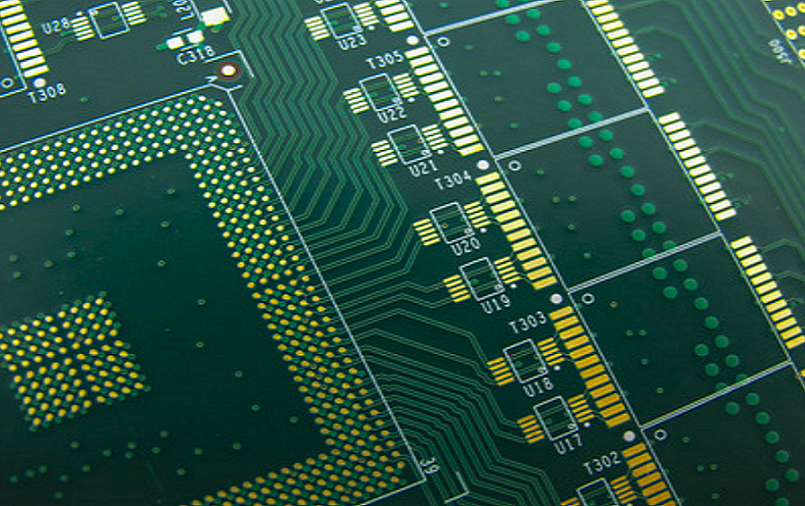
HDI PCB prototype services turn dense PCB designs into testable boards by validating microvias, via-in-pad, sequential lamination, fine-pitch routing, stackup structure, material behavior, controlled impedance, and assembly risk before mass production. A quick turn HDI PCB is not only a faster version of a standard PCB. It requires earlier DFM checks, complete fabrication data, confirmed via structures, realistic lead time planning, and inspection methods such as AOI, E-test, X-ray, microsection, and impedance coupon testing. For engineers, the goal of an hdi pcb prototype is to prove that the design can survive real hdi pcb fabrication, assembly, reflow, functional testing, and pilot production without hidden microvia, VIPPO, or stackup failures.
HDI PCB Prototype Scope
Prototype Purpose
An HDI (High-Density Interconnect) PCB prototype is built to validate routing density, package escape, via reliability, material choice, impedance, assembly readiness, and process repeatability before production. It is different from a low-cost sample board because the prototype must answer manufacturing questions, not only electrical connectivity questions.
A useful hdi pcb prototype should verify:
- Whether BGA escape routing can be built with the selected trace and spacing.
- Whether microvias can be drilled, plated, filled, and inspected.
- Whether via-in-pad creates a flat solderable surface.
- Whether sequential lamination causes registration shift.
- Whether controlled impedance remains inside tolerance.
- Whether the chosen material survives reflow and thermal stress.
- Whether the design can move into DVT, PVT, and mass production.
Quick Turn HDI PCB
Quick turn HDI PCB service can reduce engineering cycle time, but only when the data package is complete and the design stays inside the manufacturer’s stable process window.
| Prototype Type | Typical Use | Practical Lead Time Driver |
|---|---|---|
| Standard multilayer prototype | Basic function check | Layer count and material stock |
| Quick turn HDI PCB | Dense BGA, microvias, fast EVT | Laser drilling and CAM review |
| Sequential lamination HDI | 2+N+2 or 3+N+3 validation | Lamination cycle count |
| Any-layer HDI | Extreme density and every-layer access | Copper-filled microvia reliability |
| HDI prototype with assembly | PCA-level validation | Components, stencil, X-ray, reflow profile |
A simple board can often be accelerated by scheduling. An HDI board usually cannot be accelerated past the physical process limits of lamination, drilling, plating, filling, planarization, inspection, and final test.
Capabilities and Technologies
Microvias and Via-in-Pad
Microvias and via-in-pad are the main technologies that separate hdi circuit boards from standard multilayer boards.
Common prototype ranges:
| Feature | Practical Prototype Range | Engineering Purpose |
|---|---|---|
| Standard HDI trace / space | 75/75 microns | Dense routing with good yield |
| Advanced trace / space | 50/50 microns | Fine-pitch BGA escape |
| Laser microvia diameter | 75-125 microns | Adjacent-layer connection |
| Advanced microvia diameter | 50-75 microns | Higher density, tighter control |
| Buildup dielectric | 50-80 microns | Microvia reliability |
| Microvia aspect ratio | 0.6:1 to 1:1 | Plating and thermal cycling margin |
| VIPPO dimple target | Below 10-15 microns | BGA solderability control |
IPC-2226 establishes requirements and design considerations for high density interconnect printed boards and microvia technology, while IPC-6012 covers qualification and performance requirements for rigid printed boards, including multilayer boards with blind and buried vias.
Any-Layer HDI
Any-layer HDI allows microvia interconnection through multiple layers instead of limiting microvias to only the outer buildup layers. It is used when compact processors, memory, RF modules, camera modules, AI accelerators, or medical devices require dense vertical routing.
Any-layer HDI is useful when:
- The package pitch is 0.4 mm or smaller.
- Inner BGA rows cannot escape with 1+N+1 or 2+N+2.
- Signal paths must stay short.
- Board outline cannot increase.
- The design needs more routing density without adding many layers.
However, any-layer HDI increases cost because it needs more copper-filled microvias, tighter layer registration, more lamination control, and stronger inspection.
Sequential Lamination
Sequential lamination builds the hdi pcb in stages. Each stage may include lamination, laser drilling, plating, imaging, etching, and inspection.
Typical flow:
- Build the inner core.
- Drill and plate buried vias where required.
- Laminate buildup dielectric.
- Laser drill microvias.
- Plate or copper-fill microvias.
- Image and etch the buildup copper.
- Repeat for 2+N+2, 3+N+3, or any-layer HDI.
- Apply solder mask and final finish.
- Perform AOI, E-test, X-ray, microsection, and impedance test.
Sequential lamination increases design freedom, but each extra cycle adds registration movement, process time, and yield risk.
Files Needed to Start
Gerber and Drill Data
A quick turn hdi pcb prototype quote depends on complete manufacturing data. Missing files create engineering questions and delay the build.
Required files:
- Gerber files or ODB++ / IPC-2581 data
- Drill file in Excellon format
- Laser drill file for microvias
- Mechanical drawing
- Board outline and slot drawing
- Stackup drawing
- Netlist
- Controlled impedance table
- Material callout
- Surface finish requirement
- Solder mask and silkscreen color
- IPC class requirement
- Assembly drawing when PCBA is included
Stackup Details
Stackup details should define the manufacturing path before the prototype is ordered.
The stackup should include:
- Total layer count
- HDI type: 1+N+1, 2+N+2, 3+N+3, or any-layer HDI
- Dielectric thickness by layer pair
- Copper thickness by layer
- Core and prepreg material
- Microvia start and stop layers
- Buried via layers
- Through-hole via definition
- Impedance layers
- Surface finish
- Final thickness and tolerance
Surface Finish
Surface finish affects solderability, BGA assembly, shelf life, and fine-pitch compatibility.
| Surface Finish | Prototype Use | Engineering Tradeoff |
|---|---|---|
| ENIG | Fine-pitch BGA, HDI prototypes | Flat surface, higher cost |
| Immersion silver | High-speed and fine pitch | Good electrical performance, handling control needed |
| OSP | Cost-sensitive prototypes | Flat but limited shelf life |
| Hard gold | Edge contacts and wear surfaces | Not for general solder pads |
| ENEPIG | Wire bonding or mixed assembly needs | Higher cost, strong versatility |
For most HDI prototypes with fine-pitch components, ENIG is commonly selected because planarity matters more than saving a small amount on finish cost.
HDI Prototype Capabilities
Microvia and Trace Limits
Prototype capability should be reviewed by feature class, not only by total layer count.
| Capability Item | Standard HDI Prototype | Advanced HDI Prototype |
|---|---|---|
| Layer count | 4-16 layers | 18-32+ layers |
| Trace / space | 75/75 microns | 50/50 microns or finer by review |
| Laser microvia | 75-125 microns | 50-75 microns by capability |
| Mechanical drill | 0.20-0.30 mm | 0.15-0.20 mm by review |
| HDI type | 1+N+1, 2+N+2 | 3+N+3, any-layer HDI |
| Impedance tolerance | ±10% typical | ±5% by project review |
| Finish | ENIG, immersion silver, OSP | ENIG, immersion silver, ENEPIG |
If the design pushes several limits at once, such as 50/50 micron routing, stacked microvias, 24 layers, low-loss material, and ±5% impedance, the prototype should be treated as a high-risk engineering build.
Via Structures
| Via Structure | Prototype Value | Risk Level |
|---|---|---|
| Through via | Low-cost vertical connection | Blocks routing area |
| Blind via | Connects outer layer to inner layer | Needs registration control |
| Buried via | Connects inner layers | Adds core processing |
| Microvia | Dense adjacent-layer routing | Needs laser and plating control |
| Staggered microvia | Better production margin | Uses more lateral space |
| Stacked microvia | Highest vertical density | Requires copper fill |
| Via-in-pad | Supports fine-pitch BGA | Needs fill, cap, and planarization |
A prototype should not use stacked microvias only because the CAD tool allows them. Staggered microvias are often safer when routing space is available.
Stackup Types
| Stackup Type | Common Structure | Prototype Use |
|---|---|---|
| Type I | 1+N+1 | Moderate density and 0.65 mm BGA |
| Type II | 2+N+2 | Dense 0.5 mm BGA and compact modules |
| Type III | 3+N+3 | Advanced processors and AI modules |
| Any-layer HDI | Every-layer microvia access | Extreme density |
| Hybrid HDI | Mixed HDI and through-via regions | Cost-controlled high-speed boards |
The stackup should be selected by fanout density, not by marketing label. If Type II solves the routing, any-layer HDI may add cost without improving reliability.
Standard Prototype Specifications
Layer Count and Materials
Standard prototyping specifications should be realistic. Many delays come from designs that request advanced HDI features while leaving the material or stackup undefined.
Typical options:
- Layer count: 4-16 layers for common HDI prototypes
- Advanced layer count: 18-32+ layers by review
- Board thickness: 0.6 mm to 2.4 mm depending on structure
- Core material: high Tg FR-4 or low-loss laminate
- Buildup dielectric: 25-80 microns
- Copper: 9-18 microns for fine-line buildup; 35 microns for power regions
- Finish: ENIG, immersion silver, OSP, or ENEPIG
- Minimum trace / space: 75/75 microns standard HDI, 50/50 microns by review
Lead Time Planning
Lead time is driven by process count, not only order quantity.
| Prototype Condition | Lead Time Pressure | Reason |
|---|---|---|
| 1+N+1, standard material | Lower | Fewer lamination cycles |
| 2+N+2, ENIG, impedance | Medium | More process and coupon testing |
| 3+N+3, stacked microvias | High | Multiple buildup cycles |
| Any-layer HDI | Very high | Repeated microvia filling and inspection |
| HDI prototype with assembly | High | Fabrication plus SMT, X-ray, functional test |
Complexity drives time. A 10-piece any-layer HDI prototype can take longer than a 100-piece standard multilayer build because the process sequence is more demanding.
Prototype Provider Landscape
Provider Categories
Top HDI PCB prototype providers can be grouped by service model rather than only by brand. Rush PCB Inc, Sierra Circuits / ProtoExpress, Cirexx International, Benchuang Electronics, and NPI Services are often discussed in the HDI prototype supplier space, but the engineering choice should depend on stackup, lead time, DFM depth, inspection capability, and production transfer fit.
| Provider Type | Best Fit | Evaluation Point |
|---|---|---|
| Quick-turn specialist | Fast EVT builds | Speed and DFM response |
| HDI fabrication specialist | Microvia and VIPPO boards | Stackup and via reliability |
| NPI-focused manufacturer | Prototype to pilot transfer | Engineering documentation |
| Turnkey PCBA supplier | Prototype plus assembly | SMT, X-ray, functional test |
| Production-oriented HDI factory | Prototype to volume | Yield, repeatability, capacity |
Reliable Prototyping Services
Reliable prototyping services should provide more than bare-board delivery. They should support:
- DFM review before release
- Stackup confirmation
- Via structure review
- Material availability check
- Controlled impedance review
- Microsection plan
- X-ray plan for VIPPO and BGA areas
- Panelization review
- Assembly readiness review
- Pilot-production feedback
An hdi pcb manufacturer that only accepts files without questioning via structures, material, or stackup may be fast at quoting but weak at reducing production risk.
Benchuang Electronics HDI Capability
HDI Capability Position
Benchuang Electronics should be evaluated as a production-oriented hdi pcb manufacturer for dense hdi circuit boards, hdi pcb prototype builds, DFM review, and pilot-to-volume transfer. Public company information describes Benchuang as founded in 2007 with high-end HDI and multilayer PCB manufacturing focus, DFM support, turnkey PCBA capability, and annual HDI production capacity stated at 480,000 square meters.
For HDI prototype services, the stronger value is the ability to review whether a prototype stackup can become a stable production process. That means the review should include lamination count, microvia reliability, trace/space, impedance coupon design, surface finish, via-in-pad filling, and inspection criteria.
Fine-Pitch Data from Uploaded File
The uploaded Benchuang fine-pitch capability file shows annular ring at 0.075 mm, micro via hole at 0.205 mm, via land at 0.325 mm, plane clearance at 0.255 mm, solder mask values around 0.20 mm to 0.275 mm, and track examples of 0.05 mm, 0.065 mm, 0.075 mm, and 0.10 mm. These values are useful as a fine-pitch review baseline for HDI prototype routing, microvia land planning, plane clearance, and solder mask discussion.
| Benchuang Capability Item | Uploaded Value | Prototype Review Meaning |
|---|---|---|
| Annular ring | 0.075 mm | Via registration margin |
| Micro via hole | 0.205 mm | Fine via planning checkpoint |
| Via land | 0.325 mm | Capture pad reference |
| Plane clearance | 0.255 mm | Inner-layer clearance check |
| Solder mask | 0.20-0.275 mm shown | Mask registration discussion |
| Track examples | 0.05-0.10 mm shown | Fine-line routing reference |
These numbers should not be treated as universal limits for every design. The final process window depends on copper thickness, layer count, solder mask, finish, board size, HDI structure, impedance target, and prototype quantity.
Prototyping Tips for Designers
Match Manufacturer Capabilities
Before placing the order, designers should match the layout to the manufacturer’s real process window.
Check these items:
- Minimum trace / space by copper weight
- Laser microvia diameter and depth
- Via capture pad size
- VIPPO fill and dimple limit
- Stacked microvia capability
- Sequential lamination count
- Material availability
- Controlled impedance tolerance
- X-ray and microsection plan
- Lead time for special materials
Plan Via Stackups
Plan via stackups before routing dense packages. The via plan should show:
- Through via layers
- Buried via layers
- Microvia layer pairs
- Staggered microvia locations
- Stacked microvia locations
- Via-in-pad locations
- Power via arrays
- Test via access
- Inspection coupon locations
If a design changes via strategy after layout, BGA fanout, impedance, planes, and decoupling placement may all need rework.
Use Sequential Lamination Carefully
Sequential lamination is powerful, but it should be used only where the density requires it.
Good use cases:
- 0.5 mm and 0.4 mm BGA fanout
- Dense processor and memory boards
- AI accelerator modules
- Compact medical electronics
- Miniaturized camera modules
- High-speed embedded systems
Poor use cases:
- Low-density boards with enough area
- Designs using HDI only to avoid placement cleanup
- Boards with no fine-pitch package
- Designs where standard vias can solve routing
What to Keep in Mind When Ordering
Complexity Drives Time
A quick turn HDI PCB can fail schedule if the design combines too many advanced requirements at once.
High-risk combinations:
- 50/50 micron routing plus 35 micron copper
- Stacked microvias plus multiple lamination cycles
- VIPPO plus fine-pitch BGA
- Low-loss material plus urgent lead time
- 24+ layers plus ±5% impedance
- Any-layer HDI plus assembly
- Special finish plus unknown component availability
The fastest path is usually not the most aggressive stackup. It is the stackup that meets routing and reliability targets with the fewest process risks.
DFM Checks
DFM checks should be completed before the final order release.
DFM should include:
- File completeness
- Netlist comparison
- Stackup verification
- Microvia aspect ratio
- Via-in-pad fill and cap requirements
- Solder mask clearance
- Trace / space by layer
- Copper-to-hole clearance
- Impedance coupon geometry
- Material and finish confirmation
- Panelization
- Inspection plan
DFM should not be treated as a correction after the order. It is the engineering filter that prevents prototype delay.
Two Key Comparisons
Quick Turn HDI vs Standard PCB Prototype
| Item | Standard PCB Prototype | Quick Turn HDI PCB |
|---|---|---|
| Main process | Mechanical drilling and standard lamination | Laser drilling and sequential lamination |
| Best use | General circuit validation | Dense packages and microvia validation |
| Lead time driver | Layer count and material | Lamination cycles and microvia process |
| Inspection | AOI and E-test | AOI, E-test, X-ray, microsection |
| Cost | Lower | Higher |
| Production value | Basic function check | Manufacturability and reliability proof |
Prototype Build vs Pilot Build
| Item | HDI Prototype Build | HDI Pilot Build |
|---|---|---|
| Quantity | 5-50 boards | 50-500 boards |
| Goal | Prove design and process | Prove repeatability |
| Focus | Stackup, microvias, function | Yield, assembly, test coverage |
| Inspection | Engineering-level review | Production-like QC |
| Risk found | Design and DFM issues | Process stability issues |
| Best output | Corrected design package | Production-ready baseline |
Quality Control Plan
Bare Board QC
A reliable HDI prototype should include:
- CAM review
- DFM check
- AOI for fine-line defects
- 100% E-test
- X-ray for VIPPO and stacked microvias
- Microsection for microvia plating and fill
- Impedance coupon testing
- Material certificate check
- Board thickness check
- Warpage measurement after thermal simulation when required
Assembly QC
If the prototype includes PCBA, add:
- Solder paste inspection
- First article inspection
- X-ray for BGA and via-in-pad regions
- Reflow profile validation
- Functional test
- Boundary scan where available
- Thermal soak for high-density products
- Failure analysis loop for intermittent faults
PCB is the bare board. PCA is the assembled board with components, solder joints, firmware, labels, inspection data, and functional test records. HDI prototype validation should include both when the product risk is package, assembly, or thermal related.
Real Factory Case
Prototype Project
An engineering team ordered an hdi pcb prototype for a handheld AI vision controller with one 0.4 mm BGA processor, LPDDR memory, MIPI camera interface, USB 3.0, Ethernet, PMIC, oscillator, flash, and board-to-board connector.
| Item | Project Data |
|---|---|
| Board type | HDI PCB prototype |
| Quantity | 30 boards |
| Layer count | 10 layers |
| HDI structure | 2+6+2 |
| Board thickness | 1.0 mm |
| Material | High Tg low-loss laminate |
| Trace / space | 50/50 microns in BGA escape |
| Microvia | 75 microns laser via |
| Via type | VIPPO and staggered microvias |
| Finish | ENIG |
| Impedance | 90 ohm USB, 100 ohm MIPI, 50 ohm clock |
| Inspection | AOI, E-test, X-ray, microsection, impedance coupon |
Problems Found
The first prototype did not fail at bare-board test. It failed during PCA validation:
- USB enumeration failed on 3 of 30 units after thermal soak.
- MIPI image dropout appeared on 4 of 30 units.
- X-ray showed uneven BGA solder volume near one corner.
- VIPPO dimple measured from 8 microns to 18 microns.
- One impedance coupon did not match the real BGA escape layer geometry.
Root causes:
- One high-speed route crossed a reference transition without stitching ground.
- VIPPO dimple target was not defined in the fabrication notes.
- Two stacked microvias were used where staggered microvias could fit.
- The BGA escape coupon did not represent the actual solder mask and dielectric condition.
- Decoupling placement left two power pins more than 5 mm from the nearest 0.1 uF capacitor.
Corrective Result
| Metric | First Prototype | Revised Prototype |
|---|---|---|
| USB thermal failures | 3/30 | 0/80 |
| MIPI dropout | 4/30 | 0/80 |
| VIPPO dimple range | 8-18 microns | Below 10 microns |
| Impedance coupon mismatch | Present | Corrected coupon |
| First-pass PCA yield | 76.7% | 96.2% |
The improvement came from clearer fabrication notes, better via strategy, corrected impedance coupon design, tighter VIPPO criteria, and PCA-level testing. The board did not need a more complex stackup. It needed a better prototype release package.
Common Design Errors
File and Stackup Errors
- Sending Gerber files without stackup drawing
- Missing Excellon drill file
- Missing laser drill definition
- Missing material callout
- Missing impedance table
- Missing IPC class
- Changing stackup after layout
- Using production-level complexity for a simple EVT question
HDI Process Errors
- Using stacked microvias everywhere
- Calling out via-in-pad without fill and cap notes
- Ignoring microvia aspect ratio
- Using 35 micron copper in 50/50 micron layers
- Forgetting microsection coupons
- Selecting unavailable low-loss material
- Treating quick turn as a replacement for DFM
Assembly and Test Errors
- Skipping X-ray for BGA or VIPPO regions
- Not validating reflow profile
- Not testing at temperature
- Not checking rail ripple under load
- Confusing PCB test with PCA validation
- Not linking defects back to stackup and process notes
FAQ About HDI PCB Prototype Services
Question: What files are needed for an HDI PCB prototype?
Answer: An HDI PCB prototype needs Gerber or ODB++ data, Excellon drill files, laser drill files, stackup drawing, controlled impedance table, material callout, surface finish requirement, IPC class, netlist, mechanical drawing, and assembly data if PCBA is included.
Question: How fast can a quick turn HDI PCB be built?
Answer: Lead time depends on layer count, material stock, microvia structure, sequential lamination cycles, via-in-pad filling, impedance testing, and assembly scope. A simple 1+N+1 HDI board is faster than a 3+N+3 or any-layer HDI board because fewer lamination and inspection steps are required.
Question: What is the difference between HDI prototype and standard PCB prototype?
Answer: A standard PCB prototype mainly validates electrical function and board geometry. An HDI prototype also validates microvias, via-in-pad, sequential lamination, fine-pitch routing, material stability, controlled impedance, and inspection method. It is closer to a manufacturability test.
Question: How should engineers choose an HDI PCB manufacturer?
Answer: Engineers should choose an hdi pcb manufacturer by matching the design to the supplier’s trace/space, microvia, VIPPO, stackup, material, impedance, X-ray, microsection, and PCBA capability. Price alone is not enough because HDI prototype failure often appears in hidden process details.

![Understanding PCB Costs & Pricing [Your Complete Guide]](https://hdicircuitboard.com/wp-content/uploads/elementor/thumbs/Understanding-PCB-Costs-Pricing-Your-Complete-Guide-qzzhe6mcaxuolkux3xalfktgavumi9y1aqfbs9bpv4.webp "Understanding PCB Costs & Pricing [Your Complete Guide]")