







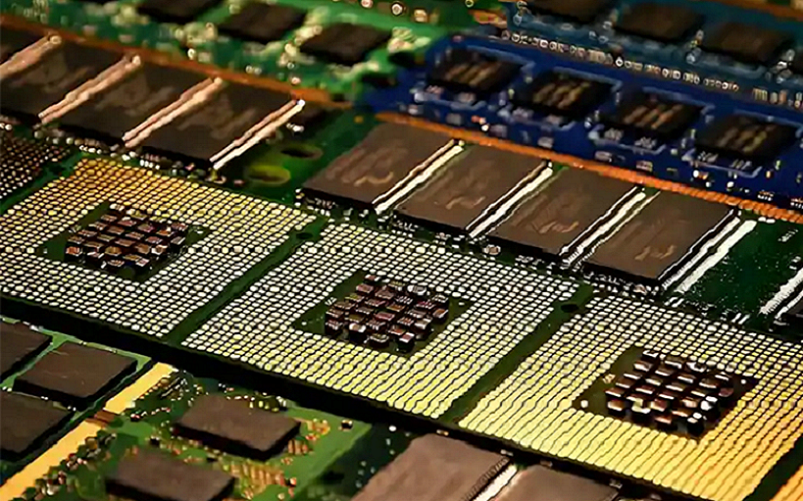
HDI PCB testing and quality control verify whether high density interconnect boards can meet electrical, mechanical, thermal, and reliability requirements after fabrication and assembly. A reliable HDI PCB inspection flow must combine AOI, X-ray inspection, flying probe testing, impedance testing, microsection analysis, 4-wire Kelvin testing, thermal cycling, traceability, and standards-based acceptance. For engineers, the core goal is not only to find defects after production, but to control microvia quality, sequential lamination accuracy, fine-line etching, copper plating thickness, and impedance stability before the HDI PCB prototype moves into volume production.
HDI PCB Testing and Quality Control
HDI PCB testing and quality control are more demanding than standard multilayer PCB inspection because the structure is denser and the defect margin is smaller. A typical HDI PCB may include 2/2 mil or 3/3 mil traces, 0.075 mm to 0.125 mm laser microvias, 0.20 mm to 0.30 mm microvia pads, 0.4 mm or 0.5 mm BGA escape routing, via-in-pad plated over structures, buried vias, and 1-step, 2-step, or 3-step sequential lamination.
The inspection plan should cover:
- Fine-line width and spacing control
- Microvia formation and copper plating quality
- Sequential lamination registration
- Buried via and blind via connectivity
- Impedance coupon verification
- Surface finish thickness
- Solder mask registration
- Via-in-pad filling and planarization
- Thermal reliability of stacked microvias
- Full traceability from material lot to final shipment
A strong HDI PCB manufacturer uses inspection checkpoints at CAM review, inner-layer imaging, laser drilling, copper plating, lamination, outer-layer etching, surface finish, final electrical test, and outgoing quality control.
Testing Methods
Testing Methods for HDI circuit boards must combine visual, electrical, structural, and environmental testing. No single test can catch all HDI defects.
Core methods include:
- AOI for open circuits, shorts, trace width variation, and etching defects
- X-ray inspection for buried vias, via-in-pad filling, registration, and hidden voids
- Flying probe testing for prototype electrical continuity and isolation
- Impedance testing by TDR for controlled impedance traces
- Microsection analysis for plating thickness and microvia integrity
- 4-wire Kelvin testing for low-resistance interconnect verification
- Thermal cycling and thermal shock for reliability validation
- Solderability testing for assembly readiness
- Ionic contamination testing when cleanliness is critical
For an HDI PCB prototype, flying probe plus AOI may be enough for low-volume validation. For Class 3 or high-reliability HDI PCB fabrication, microsection, impedance coupons, and reliability testing become essential.
Automated Optical Inspection
Automated Optical Inspection, or AOI, checks the copper pattern against the digital CAM data. In HDI PCB fabrication, AOI is critical because fine lines can be damaged by over-etching, under-etching, scratches, pinholes, or contamination.
AOI normally checks:
- Open circuits on 2 mil to 4 mil traces
- Short circuits on 2 mil to 4 mil spacing
- Copper residues between dense BGA escape traces
- Line width reduction after etching
- Mouse bites and nicks on fine traces
- Annular ring shift on microvia pads
- Foreign copper particles
- Missing pads or broken pads
Production values often used for HDI inspection include:
- Standard fine line: 3/3 mil
- Advanced fine line: 2.5/2.5 mil
- High-end fine line: 2/2 mil
- Inner-layer AOI before lamination: 100 percent
- Outer-layer AOI after pattern plating and etching: 100 percent
The value of AOI is early containment. If an inner-layer defect is found before lamination, the panel can be rejected before expensive sequential lamination continues.
X-Ray Inspection
X-Ray Inspection is used when defects are hidden inside the HDI PCB structure. It is especially useful for buried vias, stacked microvias, via-in-pad plated over structures, and dense BGA areas.
X-ray inspection can identify:
- Misregistration between laser microvias and target pads
- Buried via offset after lamination
- Voids in via fill
- Incomplete via-in-pad filling
- Copper plating discontinuity risk
- Stacked microvia alignment error
- BGA pad structure issues before assembly
Typical production concerns include:
- Microvia diameter: 0.075 mm to 0.125 mm
- Microvia target pad: 0.20 mm to 0.30 mm
- Sequential lamination registration: plus or minus 50 micrometer to 75 micrometer
- Via-in-pad fill void target: controlled by customer class and internal factory criteria
X-ray does not replace microsection analysis. X-ray is non-destructive and fast, while microsection gives direct evidence of copper plating thickness, interconnect quality, and dielectric condition.
Flying Probe Testing
Flying Probe Testing is widely used for HDI PCB prototype and low-volume production because it does not require a dedicated test fixture. It checks electrical continuity and isolation by moving probes across test pads, vias, or exposed copper points.
Flying probe testing verifies:
- Netlist continuity
- Shorts between adjacent nets
- Opens caused by over-etching
- Broken buried via or blind via connection
- Incorrect CAM output
- Isolation between fine-pitch BGA pads
Typical test values include:
- Continuity resistance threshold: commonly below 10 ohm, depending on customer specification
- Isolation test voltage: commonly 100 V to 250 V for many rigid PCB applications
- Test coverage: 100 percent netlist test when accessible points exist
- Minimum accessible pad size: often 0.20 mm to 0.30 mm depending on probe capability
For high density interconnect boards with buried test points, the fixtureless test strategy must be reviewed during DFM. If critical nets have no accessible endpoints, the electrical test may not fully verify the risk area.
Impedance Testing
Impedance Testing verifies whether controlled impedance traces meet the specified value after HDI PCB fabrication. The most common method is TDR testing on impedance coupons built on the same production panel.
Typical controlled impedance targets include:
- 50 ohm single-ended traces
- 90 ohm differential pairs
- 100 ohm differential pairs
- Standard tolerance: plus or minus 10 percent
- Advanced tolerance: plus or minus 7 percent
- Special tolerance: plus or minus 5 percent after process review
Impedance is affected by:
- Finished trace width
- Copper thickness
- Dielectric thickness
- Dk value of the material
- Differential pair spacing
- Solder mask on outer layers
- Etching compensation
- Reference plane continuity
A factory mistake occurs when the coupon passes but the real routed trace fails. This often happens when the coupon has a clean ground reference but the actual trace crosses a split plane, power island, or large anti-pad field. Coupon design must match the actual routing layer, copper thickness, dielectric thickness, and reference structure.
Microsection Analysis
Microsection Analysis is one of the most important structural tests for HDI PCB quality. A cross-section sample is cut, polished, etched if required, and examined under magnification to verify internal construction.
Microsection analysis checks:
- Plated through-hole copper thickness
- Microvia copper plating continuity
- Capture pad connection quality
- Lamination voids
- Resin recession
- Barrel cracks
- Inner-layer separation
- Via fill condition
- Copper wrap plating
- Dielectric thickness
- Interlayer registration
Common inspection values include:
- PTH copper thickness: often 20 micrometer to 25 micrometer or higher depending on class and specification
- Laser microvia diameter: 0.075 mm to 0.125 mm
- Microvia aspect ratio: commonly 0.75:1 to 1:1 for stable production
- Dielectric thickness for laser layers: 50 micrometer to 75 micrometer
- Microsection magnification: commonly 50X to 200X depending on feature size
For stacked microvias, microsection is essential because a small separation at the target pad interface may pass basic electrical testing but fail after thermal cycling.
Reliability and Stress Testing
Reliability and Stress Testing measures whether the HDI PCB can survive real operating conditions. HDI structures have more interfaces, thinner dielectric layers, and smaller via geometries, so thermal and mechanical stress must be considered during qualification.
Reliability tests may include:
- Thermal cycling
- Thermal shock
- Reflow simulation
- Solder float
- IST or interconnect stress testing
- CAF resistance testing
- Moisture resistance testing
- Peel strength testing
- Solder mask adhesion testing
- Ionic contamination testing
Typical test conditions used in production qualification may include:
- Thermal cycling: minus 40 degrees Celsius to 125 degrees Celsius
- Thermal shock dwell: 10 minutes to 15 minutes per extreme
- Reflow simulation: 245 degrees Celsius to 260 degrees Celsius peak
- Number of cycles: 100, 250, 500, or 1000 cycles based on product risk
- Moisture exposure: 85 degrees Celsius and 85 percent relative humidity for selected reliability evaluations
The value of stress testing is early failure exposure. A weak microvia interface, poor copper wrap, or marginal lamination bond can pass room-temperature testing but fail after thermal expansion mismatch.
4-Wire Kelvin Testing
4-wire Kelvin testing is used when standard continuity testing is not sensitive enough. It separates current-carrying leads from voltage-sensing leads so that probe contact resistance does not hide small resistance changes.
4-wire Kelvin testing is useful for:
- Microvia chain resistance
- Stacked microvia reliability
- Via-in-pad plated over structures
- Fine-pitch power paths
- High-current HDI interconnects
- Low-ohm buried via networks
Typical use cases include:
- Measuring microvia chains below 1 ohm
- Detecting resistance shifts in milliohm-level structures
- Comparing before-and-after thermal cycling resistance
- Verifying high-reliability HDI coupon performance
For HDI PCB fabrication, Kelvin testing is valuable because a microvia may not be fully open, but its resistance may increase enough to indicate weak plating or an unstable interface.
Thermal Cycling & Shock
Thermal Cycling & Shock testing evaluates the reliability of copper interconnects, microvias, dielectric materials, and lamination bonds under repeated expansion and contraction.
Key failure modes include:
- Microvia target pad separation
- Barrel cracking in plated through holes
- Inner-layer separation
- Resin cracking
- Copper fatigue
- Via fill cracking
- Lamination delamination
Typical test ranges include:
- Thermal cycling: minus 40 degrees Celsius to 125 degrees Celsius
- Severe cycling: minus 55 degrees Celsius to 125 degrees Celsius
- Thermal shock transfer time: usually under 30 seconds in dedicated chambers
- Dwell time: 10 minutes to 15 minutes
- Qualification cycles: 100 to 1000 cycles depending on product class
For stacked microvias, thermal cycling is more important than for staggered microvias because the stress path is concentrated through vertically aligned copper interfaces.
Quality Control Standards
Quality Control Standards & Guidelines define how HDI circuit boards should be designed, fabricated, inspected, and accepted. Standards do not replace customer drawings, but they create a common language between designer, buyer, and HDI PCB manufacturer.
Key standards include:
- IPC-6012 for qualification and performance of rigid printed boards
- IPC-2226 for HDI design requirements and microvia design considerations
- IPC/JPCA-2315 for HDI and microvia design structure guidance
- IPC-TM-650 for test methods covering electrical, mechanical, chemical, and environmental testing
- IPC-A-610 for electronic assembly acceptability
- IPC-A-600 for printed board visual acceptability
- IPC-6013 when flexible or rigid-flex constructions are involved
- IPC-4101 or HDI-related material specifications when laminate qualification is required
The fabrication drawing should define:
- IPC class
- Acceptance criteria
- Copper thickness
- Microvia structure
- Impedance tolerance
- Electrical test requirement
- Surface finish
- Solder mask requirement
- Reliability test requirement
- Any customer-specific deviation
IPC-6012
IPC-6012 is used for rigid printed board qualification and performance. For HDI PCB fabrication, it helps define expectations for board class, plating quality, holes, visual defects, cleanliness, and performance requirements.
Factory application includes:
- Class 2 for dedicated service electronic products
- Class 3 for high-reliability products with continuous performance demand
- Plated hole quality control
- Microsection acceptance
- Copper thickness verification
- Surface and internal defect control
- Final inspection and shipment release
A design requiring Class 3 acceptance must be reviewed before quotation because Class 3 HDI circuit boards often require tighter annular ring control, stronger inspection coverage, and more conservative process limits.
IPC-2226
IPC-2226 is the sectional design standard for high density interconnect printed boards. It is used with general PCB design standards to define HDI structures, microvia considerations, design rules, and interconnection concepts.
For engineers, IPC-2226 supports decisions on:
- Blind via and buried via structure
- Microvia size and pad design
- HDI build-up types
- Sequential lamination planning
- Dielectric separation
- Layer-to-layer interconnect structure
- High-density routing rules
Production values must still be confirmed by the HDI PCB manufacturer. For example, a 0.075 mm microvia may be possible, but stable yield depends on dielectric thickness, laser drilling condition, target pad diameter, plating process, and lamination registration.
IPC/JPCA-2315
IPC/JPCA-2315 provides guidance for HDI and microvia design structures. It is useful during early architecture decisions because it helps engineers compare different HDI build-up styles before detailed routing.
It supports decisions on:
- Microvia design structure
- HDI layer build-up
- Via selection
- Routing density
- Material and process selection
- Manufacturing tradeoffs
For a 0.5 mm BGA, 1-step HDI may be enough when routing channels are available. For a 0.4 mm BGA with multiple high-speed differential pairs, 2-step HDI or via-in-pad plated over may be required.
IPC-TM-650
IPC-TM-650 contains standardized test methods for printed board evaluation. In HDI PCB testing, it provides a structured basis for chemical, mechanical, electrical, and environmental tests.
Common test categories include:
- Microsection preparation and evaluation
- Thermal stress testing
- Ionic cleanliness testing
- Peel strength testing
- Solderability testing
- Insulation resistance testing
- Moisture and insulation resistance
- Material performance testing
The value of IPC-TM-650 is repeatability. When a customer and supplier use the same test method, the result is easier to compare and dispute risk is reduced.
IPC-A-610
IPC-A-610 defines acceptability requirements for electronic assemblies. It becomes important after HDI PCB fabrication when the board is assembled with fine-pitch components, BGAs, QFNs, micro BGAs, or bottom-terminated components.
Assembly inspection areas include:
- Solder joint acceptability
- BGA solder ball condition
- Component alignment
- Solder bridging
- Insufficient solder
- Voids where applicable
- Tombstoning
- Cleanliness after assembly
- Rework acceptability
For HDI circuit boards with 0.4 mm BGA pitch, PCB fabrication quality and assembly quality are connected. Poor solder mask registration, uneven via-in-pad planarization, or excessive surface finish thickness variation can create assembly defects even when the bare board passes electrical testing.
Manufacturing Best Practices
HDI PCB Manufacturing Best Practices combine design control, process control, and inspection control. The factory must build quality into each step rather than relying only on final test.
Key practices include:
- Confirm stackup before layout release
- Use manufacturable trace and spacing values
- Keep 3/3 mil routing where possible
- Use 2/2 mil only after process review
- Keep laser microvia aspect ratio near 0.75:1 to 1:1
- Use staggered microvias when reliability margin is more important than density
- Use stacked microvias only when routing density requires them
- Validate via-in-pad filling and planarization
- Control copper plating thickness before etching
- Use impedance coupons for controlled layers
- Perform microsection on representative coupons
- Maintain material lot traceability
A strong HDI PCB manufacturer will stop a build during engineering review if the design combines high risk items such as 0.075 mm stacked microvias, 2/2 mil routing, 3-step lamination, and plus or minus 5 percent impedance without enough process margin.
Sequential Lamination
Sequential Lamination is used to build HDI structures in stages. Each lamination cycle adds cost, time, and registration risk.
Typical structures include:
- 1-step HDI: one build-up layer on each side
- 2-step HDI: two build-up cycles for higher density
- 3-step HDI: used for very dense BGA or stacked microvia structures
- 1+N+1 structure for moderate HDI density
- 2+N+2 structure for advanced routing density
- 3+N+3 structure for high-end HDI applications
Production risks include:
- Layer registration shift
- Resin flow variation
- Dielectric thickness variation
- Misalignment between microvia and target pad
- Cumulative thermal stress
- Increased chance of lamination voids
A 2-step HDI board usually has lower process risk than a 3-step HDI board. If the routing can be solved with 2+N+2 instead of 3+N+3, the lower lamination count normally improves yield and lead time.
Microvia Aspect Ratios
Microvia Aspect Ratios control plating reliability. The aspect ratio is the microvia depth divided by the microvia diameter.
Typical HDI values include:
- Laser microvia diameter: 0.075 mm to 0.125 mm
- Laser dielectric thickness: 50 micrometer to 75 micrometer
- Stable microvia aspect ratio: 0.75:1 to 1:1
- Higher-risk microvia aspect ratio: above 1:1
- Common microvia pad: 0.20 mm to 0.30 mm
A 0.10 mm laser via through 75 micrometer dielectric has an aspect ratio of 0.75:1, which is usually more stable than a 0.075 mm laser via through 100 micrometer dielectric. When the aspect ratio increases, plating solution exchange becomes harder and copper continuity risk increases.
Traceability
Traceability allows quality engineers to connect each finished HDI PCB to the exact materials, processes, operators, machines, and test results used during production.
Traceability should include:
- Laminate lot number
- Prepreg lot number
- Copper foil lot number
- Inner-layer batch record
- Laser drilling machine record
- Plating bath record
- Lamination cycle record
- AOI result
- X-ray result when required
- Microsection report
- Impedance report
- Electrical test report
- Final inspection record
- Shipment lot identification
Traceability is critical when a customer reports a field issue. Without it, the factory cannot isolate whether the problem came from one panel, one lamination cycle, one plating bath, or one material lot.
Two Key Comparisons
| Inspection Method | Best Used For | Limitation | Factory Value |
|---|---|---|---|
| AOI | Fine-line opens, shorts, width variation | Cannot inspect hidden buried structures | Fast containment before lamination |
| X-ray | Hidden vias, via fill, registration | Does not directly measure copper thickness | Non-destructive internal inspection |
| Test Type | Best Used For | Typical Range | Factory Value |
|---|---|---|---|
| Flying probe | HDI PCB prototype continuity and isolation | 100 V to 250 V isolation test | No fixture cost for low volume |
| 4-wire Kelvin | Low-resistance microvia chains | Milliohm-level resistance change | Detects weak interconnects earlier |
Real Factory Case
A 14-layer 2-step HDI PCB prototype was produced for a high-speed industrial control module. The design used fine-pitch BGA, controlled impedance, microvias, buried vias, and via-in-pad plated over pads.
Original build data:
- Layer count: 14 layers
- HDI structure: 2+N+2
- Board thickness: 1.6 mm
- Material class: high-Tg 180 degrees Celsius
- Minimum trace and spacing: 3/3 mil
- Local BGA escape: 2.5/2.5 mil
- Laser microvia: 0.10 mm
- Microvia pad: 0.25 mm
- Mechanical via: 0.20 mm
- BGA pitch: 0.5 mm
- Controlled impedance: 50 ohm single-ended and 100 ohm differential
- Impedance tolerance: plus or minus 10 percent
- Surface finish: ENIG
- Copper: 1 oz outer layers and 0.5 oz inner layers
Problems found during production review:
- Two differential pairs crossed a split reference plane
- Several microvia pads had only 0.05 mm registration margin
- Via-in-pad fill planarity was not defined
- One microvia chain showed higher resistance during Kelvin sampling
- The original coupon did not match the actual L3 stripline structure
Corrective actions:
- Restored continuous ground under high-speed traces
- Increased microvia target pad from 0.23 mm to 0.25 mm
- Defined via-in-pad planarization limit before ENIG
- Added X-ray inspection for BGA via-in-pad areas
- Added microsection coupon for stacked microvia verification
- Rebuilt impedance coupon to match L3 and L10 structures
- Added Kelvin testing for microvia chain coupons
Final results:
- 100 ohm differential impedance measured from 97.2 ohm to 103.8 ohm
- 50 ohm single-ended impedance measured from 48.5 ohm to 52.0 ohm
- Microsection confirmed continuous copper at microvia interfaces
- Kelvin resistance remained stable after 250 thermal cycles
- AOI found no over-etched fine-line defects
- X-ray confirmed acceptable via-in-pad fill condition
- Final electrical test passed 100 percent netlist verification
The case shows that HDI PCB testing is most effective when inspection data is connected across AOI, X-ray, microsection, impedance, Kelvin, and reliability testing.
Common Design Errors from Production
- No defined IPC class
The drawing does not state Class 2 or Class 3, so acceptance criteria become unclear. - Microvia aspect ratio too high
A 0.075 mm microvia through 100 micrometer dielectric creates plating risk. - Missing impedance coupon data
The drawing lists 100 ohm differential impedance but does not define layer, width, spacing, tolerance, or reference plane. - No access for electrical test
Critical nets are buried under BGA areas without accessible test points. - Overuse of stacked microvias
Stacked microvias are used where staggered microvias could reduce reliability risk. - Via-in-pad filling not specified
Assembly defects occur because planarization and filling acceptance were not defined. - Plane split under high-speed traces
The coupon passes TDR, but the actual channel fails because the return path is broken. - Traceability ignored
Material lots and process records are incomplete, making failure analysis slow and uncertain.
FAQ
Question: What tests are required for HDI PCB quality control?
Answer: HDI PCB quality control normally includes AOI, X-ray inspection, flying probe testing, impedance testing, microsection analysis, and final electrical testing. For high-reliability HDI circuit boards, 4-wire Kelvin testing, thermal cycling, thermal shock, ionic cleanliness, and solderability testing may also be required.
Question: Why is microsection analysis important for HDI PCB fabrication?
Answer: Microsection analysis directly verifies internal structure. It checks copper thickness, microvia plating, target pad connection, lamination quality, via fill condition, and dielectric thickness. This is important because some HDI defects can pass electrical testing at room temperature but fail after thermal cycling.
Question: When should 4-wire Kelvin testing be used?
Answer: 4-wire Kelvin testing should be used when low-resistance interconnect quality matters, especially for microvia chains, stacked microvias, via-in-pad plated over structures, and high-current paths. It can detect milliohm-level resistance changes that standard continuity testing may miss.
Question: How does an HDI PCB manufacturer control traceability?
Answer: An HDI PCB manufacturer controls traceability by recording laminate lots, prepreg lots, copper foil lots, laser drilling data, plating bath records, lamination cycles, AOI results, X-ray records, microsection reports, impedance reports, electrical test data, and final shipment lot numbers.

![Understanding PCB Costs & Pricing [Your Complete Guide]](https://hdicircuitboard.com/wp-content/uploads/elementor/thumbs/Understanding-PCB-Costs-Pricing-Your-Complete-Guide-qzzhe6mcaxuolkux3xalfktgavumi9y1aqfbs9bpv4.webp "Understanding PCB Costs & Pricing [Your Complete Guide]")