







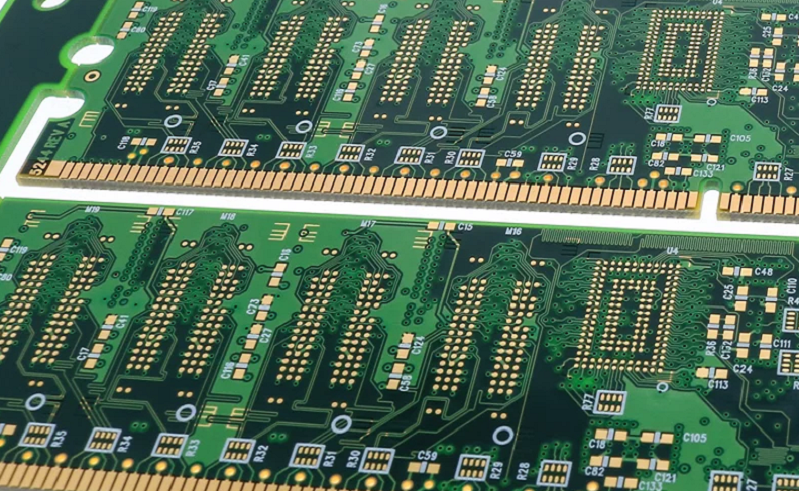
High Density Interconnect (HDI) PCBs are essential in today’s high-speed, compact electronic devices. The HDI interface refers to the complex interconnection system used in these circuit boards to enable high-performance signal routing within a limited space. To efficiently connect multiple layers, HDI circuit boards use finer lines, smaller vias (such as microvias and blind vias), and higher wiring density than traditional PCBs. HDI PCBs enable greater functionality without expanding board size as devices get more compact and potent.
Advanced features like via-in-pad, sequential lamination, and stacked via construction are supported by the HDI interface. With the help of these characteristics, designers can produce small, multi-layer boards that satisfy the requirements for signal integrity of high-frequency applications, such as wearables, 5G, aerospace, and the Internet of Things.
This blog explores what makes an HDI interface unique, how it differs from traditional PCBs, and why selecting the right HDI PCB manufacturer is critical for success in modern electronics design.
What is the HDI Interface in PCB Design?
An HDI interface in PCB design refers to the electrical and mechanical connectivity framework that supports high-density interconnect architecture. It enables communication between dense layers in multi-layer PCBs by utilizing technologies, such as via-in-pad, blind vias, buried vias, and microvias. The HDI interface is crucial for applications with high-performance requirements and constrained space, such as mobile devices, medical implants, and aerospace equipment.
More components and signals can be crammed into smaller designs thanks to HDI interfaces, which permit more connections per unit area than conventional PCB interfaces. Shorter paths and fewer parasitic effects enable improved electrical performance, which is essential for impedance control and high-frequency signal routing. A well-optimized HDI interface ensures signal fidelity, reduces noise, and enhances mechanical strength. As a result, HDI interfaces are becoming the standard for high-speed digital circuits requiring performance without bulk.
What Is The Definition Of HDI Interface In PCB Design?
The layered network of fine traces, microvias, and stacked interconnects utilized in HDI PCBs is known as the HDI interface in PCB design. A circuit board can have a smaller form factor and more functionality thanks to this interface, which enables signal pathways to be densely packed across several layers. It’s not just about density—it’s also about efficiency, performance, and scalability in multi-layer environments.
The HDI interface supports complex signal routing with reduced signal loss and controlled impedance, which is critical in high-speed communication systems. Layers are added using precisely drilled microvias to join internal and external components in a sequential lamination process. IPC-2226 standards must be followed by HDI interfaces to guarantee that the copper thickness, dielectric spacing, and via structure satisfy performance and reliability requirements. In the end, this interface serves as the foundation for sophisticated electronics where speed, accuracy, and miniaturization are critical.
Comparing Conventional PCB Interfaces with HDI Interfaces
Conventional PCBs limit routing flexibility and board density by using through-hole vias and wider trace widths. The HDI interface, on the other hand, enables designers to increase circuit density and decrease layer counts through the use of fine-line etching, blind vias, and microvias. As a result, PCBs become more efficient, lightweight, and compact, making them perfect for high-speed applications, automotive systems, and consumer electronics.
Additionally, HDI interfaces offer shorter signal paths, resulting in better signal integrity, reduced inductance, and improved electromagnetic compatibility (EMC). Unlike traditional boards, where design constraints may hinder layout, HDI allows components to be placed closer together and routed more effectively. With HDI, trace geometry is tightly controlled, and high-frequency signals can be managed more reliably. Traditional PCBs are limited in multi-layer expansion and performance at high data rates, while HDI interfaces enable seamless integration of high-speed communication protocols on smaller, faster boards.
Key Features Of HDI PCB Interfaces In High-Speed Designs
HDI PCB interfaces are specifically engineered to handle the demands of high-speed and high-frequency electronics. Their defining features include microvias for minimal signal path length, fine-line widths for high-density routing, laser-drilled vias for precision interconnections, and via-in-pad technology that supports tight component placement. These interfaces support sequential lamination, allowing the creation of multi-layer boards that accommodate complex signal routing.
In high-speed electronics, signal degradation due to inductance, capacitance, or EMI can severely impact performance. HDI interfaces mitigate these risks by offering consistent impedance control, shorter electrical paths, and highly optimized stackups. These features collectively enable low signal attenuation, minimal delay, and reduced reflections, which are crucial for maintaining signal fidelity at gigabit-per-second data rates.
Applications that benefit include 5G devices, radar systems, networking equipment, and high-speed storage. The HDI interface is a must-have for any design where performance per square inch is a priority.
Microvias And Blind Vias Affect On HDI Interface In Pcbs
Microvias and blind vias are fundamental to the efficiency of the HDI interface. Microvias, which are laser-drilled and typically no deeper than one PCB layer, provide direct vertical connections with minimal space. Blind vias connect outer layers to one or more internal layers without passing through the entire PCB, helping reduce unnecessary interconnects and layer count.
Together, these vias reduce parasitic inductance, lower signal delay, and allow more routing space on inner layers. This is especially beneficial for high-density interconnect PCBs, where space is at a premium and performance cannot be compromised. The reduced size of microvias means traces can be routed closer together without increasing crosstalk or signal interference.
From a design perspective, these vias enable tighter layouts and more functionality on smaller boards. From a manufacturing standpoint, they require precise drilling and filling processes, which a skilled HDI PCB manufacturer must master to ensure quality and reliability.
The Design Rules For HDI Interfaces In Multi-Layer Pcbs
Designing HDI interfaces for multi-layer PCBs requires strict adherence to layout rules that ensure electrical performance and manufacturability. Key design rules include controlled impedance routing, optimized microvia stacking, appropriate aspect ratios, and via-in-pad usage where necessary. Trace width, spacing, dielectric thickness, and via diameters must be tightly controlled to prevent signal loss and meet high-frequency performance standards.
Stack-up planning is critical in HDI PCB design. Designers must determine the sequence of laminated layers to accommodate blind/buried vias without compromising board reliability. Materials with low dielectric loss and stable dielectric constant (Dk) are preferred to ensure minimal signal degradation.
Design software tools must support HDI-specific features like via tenting, staggered and stacked microvias, and proper pad-to-via clearances. Additionally, following IPC-2226 guidelines helps ensure the board meets mechanical and electrical standards. Working closely with an experienced HDI PCB manufacturer ensures your design remains both manufacturable and high-performing.
Effect Of HDI Interface On Impedance Control In PCB Design?
In high-speed PCB design, maintaining controlled impedance is crucial, and the HDI interface plays a pivotal role in achieving it. With tighter trace geometries and precise stack-up configurations, HDI interfaces allow for consistent signal behavior across layers. Microvias and shorter trace lengths minimize parasitic effects, enabling accurate impedance matching between components.
Controlled impedance helps avoid signal reflections, crosstalk, and timing issues—especially important in interfaces like DDR, USB, HDMI, and high-speed SerDes. HDI PCBs use uniform dielectric materials, controlled copper thickness, and calculated trace widths/spacings to ensure that each signal trace maintains its designed impedance.
Additionally, via stubs—which can cause impedance discontinuities—are minimized or eliminated in HDI designs through back-drilling or sequential lamination. For high-speed signals operating above 1GHz, these refinements make all the difference in performance. An HDI interface essentially turns the PCB into a well-tuned transmission line system, which is critical for modern electronics.
System Design Challenges with HDI Interface Integration
Integrating HDI interfaces into complex systems comes with challenges that stem from the high level of precision required in both design and assembly. The tight spacing between traces and vias can cause interference during component placement, especially in BGA or QFN packages. Components must be carefully chosen to match the thermal, mechanical, and electrical characteristics of the HDI PCB.
Routing constraints are another concern. As HDI designs shrink in size, the available real estate for trace routing decreases, increasing the complexity of interconnect paths. Designers must plan early for via placement, layer stack-ups, and impedance-controlled routes.
From a manufacturing standpoint, HDI PCBs require advanced fabrication techniques, such as laser drilling and sequential lamination, which are not supported by all vendors. Even minor design flaws can impact yield, increasing costs. To ensure success, collaboration between PCB designers, HDI PCB manufacturers, and system engineers is critical, especially during prototyping and pre-production phases.
How HDI Interfaces Help Reduce PCB Size and Weight
The HDI interface is designed to maximize functionality in minimal space, making it ideal for compact and lightweight electronic devices. By using microvias, blind vias, and fine-line routing, HDI interfaces reduce the need for excessive layers and wide traces, effectively shrinking the board’s footprint.
Instead of spreading the design across a larger area, HDI allows for vertical integration—stacking components and interconnects across layers. This method supports dense packaging of components such as BGAs, FPGAs, and SoCs without compromising performance. Because of this, HDI circuit boards are commonly used in smartphones, tablets, drones, and medical implants where every millimeter counts.
Reducing size also contributes to lighter devices. By optimizing the stack-up and eliminating unused real estate, HDI PCBs can shave off several grams—critical for aerospace and wearable tech. Overall, the HDI interface enables more powerful, feature-rich products while keeping form factor and weight under control.
Role Of The HDI Interface In High-Frequency Signal Routing
In high-frequency signal routing, the HDI interface plays a vital role in preserving signal quality, reducing interference, and improving timing accuracy. As signal frequencies increase, the margin for signal degradation narrows. Traditional PCBs often introduce impedance mismatches, reflection, and EMI. The HDI interface, with its controlled impedance and minimal trace lengths, mitigates these issues.
The use of microvias eliminates the long, stubby vias that can act as signal traps or antennas at high frequencies. Routing high-speed signals through finely tuned HDI structures ensures minimal signal skew and reduced transmission loss. This is especially crucial in applications like 5G networks, radar, satellite communications, and high-speed computing.
Additionally, the HDI interface allows for dedicated power and ground planes near signal layers, creating ideal conditions for signal isolation and noise suppression. By facilitating clean and predictable signal routing, HDI design principles are essential for systems operating in the multi-gigahertz frequency range.
Considerations For Heat Dissipation In HDI Interfaces
Despite their compact size, HDI PCBs must manage heat efficiently to prevent component failure and ensure longevity. The HDI interface, by nature, results in a dense component layout, which can concentrate thermal loads. Effective thermal management becomes essential in applications like high-performance computing and telecom.
Key strategies include using via-in-pad designs to conduct heat away from hot components directly to internal or external heat spreaders. Copper planes, especially dedicated ground and power planes, help distribute thermal energy evenly across the board. Designers also select thermally conductive materials, such as high-Tg and low-CTE laminates, to withstand elevated temperatures.
From a manufacturing perspective, ensuring adequate via fill, heat sink integration, and surface finish compatibility is vital. Collaborating with a skilled HDI PCB manufacturer during the design phase ensures thermal considerations are built into the stack-up, preventing thermal hotspots that compromise reliability.
Impact Of HDI Interfaces On Manufacturability And Yield
The HDI interface introduces advanced design and fabrication requirements that directly influence manufacturability and production yield. While HDI PCBs offer performance advantages, they demand precision in every phase—from CAD design to final assembly. Laser drilling, sequential lamination, and microvia plating must be flawlessly executed.
Yield can be affected by microvia misalignment, delamination, or via fill inconsistencies. To reduce these risks, HDI designs often undergo Design for Manufacturability (DFM) reviews to ensure the board can be produced reliably using available processes. Choosing an experienced HDI PCB manufacturer with proven capabilities in via formation, registration, and high-layer count builds is critical.
Manufacturability is also tied to material selection, where the right combination of resin systems and copper weights can reduce warping and increase plating uniformity. Ultimately, when HDI designs are optimized for both electrical performance and ease of manufacturing, they result in higher yields, lower rework rates, and cost savings.
HDI Interface Impact On Electrical & Mechanical Reliability
HDI interfaces significantly enhance both electrical and mechanical reliability when designed and manufactured correctly. Electrically, the short interconnect paths made possible by microvias, blind vias, and fine-line routing reduce parasitic inductance and capacitance, which leads to more stable and accurate signal transmission—especially critical in high-speed digital and RF designs. Crosstalk and reflections are reduced when controlled impedance is easier to maintain.
Because HDI PCBs are smaller and have more densely packed structures, less material is used mechanically, which lowers weight without compromising performance. In contrast to conventional through-holes, microvias are less prone to delaminate or crack when subjected to mechanical and thermal stress. Additionally, layer-to-layer alignment is enhanced by sequential lamination and laser drilling, contributing to long-term structural integrity.
HDI interfaces contribute to a longer lifespan for the PCB and the components mounted on it by facilitating improved thermal dissipation and more equitable stress distribution. For this reason, mission-critical systems frequently use HDI circuit boards.
What Are The IPC Standards For HDI Interface Design?
When designing HDI PCBs, compliance with IPC standards ensures quality, manufacturability, and interoperability. The key guideline for HDI designs is IPC-2226, which outlines design requirements for high-density interconnect circuit boards. This standard covers essential elements such as microvia construction, dielectric materials, aspect ratios, trace and space dimensions, and via types (stacked, staggered, skip vias, etc.).
IPC-6016 is another relevant standard, focusing on qualification and performance specification for HDI printed boards. It describes the requirements for evaluating and confirming HDI PCBs’ structural and electrical dependability, such as environmental stress performance, dielectric breakdown, and microvia integrity.
Adhering to these IPC standards aids in avoiding design mistakes that may result in early board deterioration or fabrication failures. In turn, it makes collaboration with manufacturers more seamless, since most HDI PCB manufacturers use IPC guidelines to evaluate incoming designs. Adhering to these standards ensures that your HDI interface meets both functional and industry expectations.
How Does The HDI Interface Facilitate Multi-Layer PCB Designs?
The HDI interface revolutionizes multi-layer PCB design by enabling more connections in a smaller area. Unlike traditional PCBs, which rely on large through-holes to connect layers, HDI designs efficiently stack multiple functional layers using blind and buried vias, microvias, and sequential lamination. As a result, boards with eight, ten, or even more layers can be made without becoming appreciably thicker.
Power, ground, or high-speed signal traces can be placed on each layer of a multi-layer HDI PCB to enhance circuit separation and signal integrity. Microvias facilitate quicker layer-to-layer communication by shortening signal path lengths and parasitic effects. This is particularly useful in advanced electronics such as smartphones, high-speed routers, and military-grade equipment.
Higher device integration is also made possible by the HDI approach’s support for intricate routing under fine-pitch components like BGAs. The end product is a multi-layer circuit that supports state-of-the-art electronic systems and is small, strong, and extremely dependable.
Signal Integrity and HDI Interfaces in High-Speed Systems
One of the most crucial factors in high-speed communication systems is signal integrity, which HDI interfaces are designed to specifically address. Digital signals are extremely sensitive to impedance mismatches, crosstalk, and reflections because they behave more like analog radio frequency signals as their frequency increases. The HDI interface combats these issues through tight trace tolerances, shorter interconnects, and precise impedance control.
Microvias and closely managed dielectric layers allow signals to travel cleaner and faster across the PCB, reducing jitter and propagation delays. By sandwiching delicate signals between solid ground and power planes, the HDI design creates a controlled transmission environment.
Systems that use PCIe, DDR4/5, USB 3.1+, HDMI, and 10G+ Ethernet, where signal quality maintenance is crucial, require these features. When used correctly, the HDI interface guarantees that signals travel to their destination with the least amount of distortion and loss possible, meeting the performance requirements of the high-speed communication infrastructure of today.
Conclusion: Choosing the Right HDI PCB Manufacturer Matters
Integrating an HDI interface into your PCB design is no longer optional; it’s essential for achieving compact, reliable, and high-performance products. The advantages of high-density interconnect HDI PCBs are obvious, regardless of whether you’re creating next-generation smartphones, aerospace systems, or industrial IoT devices: increased reliability, decreased board size and weight, better signal integrity, and support for high-speed communication.
However, selecting the appropriate HDI PCB manufacturer is essential to achieving these advantages. Not all fabrication houses have the expertise, technology, or quality control required to produce advanced HDI circuit boards. A partner with a proven track record, IPC-compliant processes, and in-house engineering support can help bring your design to life—on time and within budget.
When performance and precision matter, don’t settle for less. Choose an experienced HDI partner who understands your needs and delivers uncompromised quality, every step of the way.

![Understanding PCB Costs & Pricing [Your Complete Guide]](https://hdicircuitboard.com/wp-content/uploads/elementor/thumbs/Understanding-PCB-Costs-Pricing-Your-Complete-Guide-qzzhe6mcaxuolkux3xalfktgavumi9y1aqfbs9bpv4.webp "Understanding PCB Costs & Pricing [Your Complete Guide]")