







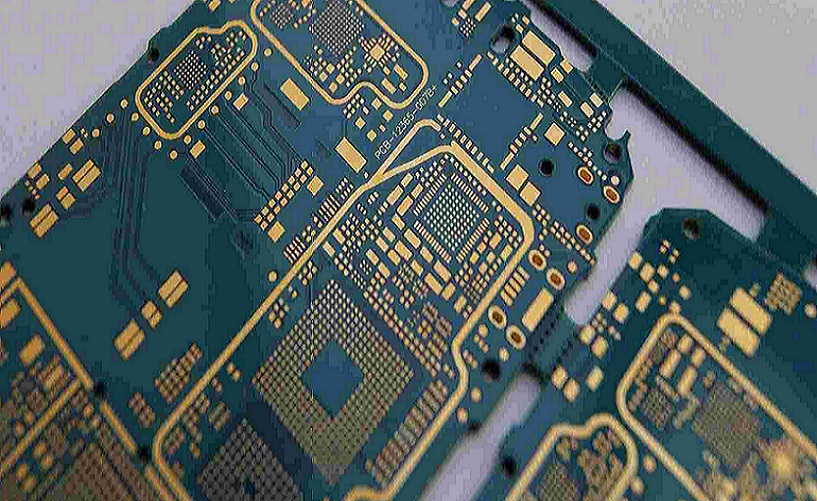
HDI PCB design should start with stack-up planning, microvia selection, fine-pitch BGA breakout, material choice, controlled impedance, and DFM review before layout begins. A reliable high density interconnect board is not created by simply shrinking trace width. It requires correct microvia aspect ratio, via-in-pad rules, staggered or stacked via decisions, dielectric thickness control, sequential lamination planning, routing discipline, and early communication with the hdi pcb manufacturer. For engineers, the goal is to move from hdi pcb prototype to repeatable hdi pcb fabrication without microvia cracking, BGA solder defects, impedance drift, or poor production yield.
HDI PCB Design Basics
Core Design Targets
HDI PCB design is used when conventional multilayer routing cannot support package density, product size, signal speed, or component placement. Typical triggers include 0.5 mm or 0.4 mm BGA packages, dense memory routing, compact IoT devices, GPU or AI modules, medical electronics, and high-speed embedded systems.
Practical design targets:
| Design Item | Standard HDI Target | Advanced HDI Target | Engineering Value |
|---|---|---|---|
| Trace / space | 75/75 microns | 50/50 microns | Supports dense routing under fine-pitch BGA |
| Microvia diameter | 75-125 microns | 50-75 microns | Reduces routing congestion and via stub |
| Microvia aspect ratio | 0.6:1 to 1:1 | Keep below 1:1 | Improves plating reliability |
| Buildup dielectric | 50-80 microns | 25-50 microns | Enables laser microvia formation |
| BGA pitch | 0.65 mm to 0.5 mm | 0.4 mm and below | Drives via-in-pad and HDI stackup choice |
| Impedance | 50, 85, 90, 100 ohm | Project-specific | Supports high-speed routing |
IPC-2226 is the key IPC design standard for high density interconnect printed boards, while IPC-2221 provides general printed board design requirements. IPC-6012 supports rigid printed board qualification and performance requirements, including multilayer boards with blind and buried vias.
PCB vs PCA Context
A PCB is the bare printed circuit board. A PCA is the assembled circuit board after components, solder joints, labels, firmware, coating, inspection records, and functional test are added.
This distinction matters because an hdi pcb may pass bare-board E-test but still fail as a PCA. Common PCA-level failures include:
- BGA voiding caused by poor via-in-pad filling
- Intermittent high-speed links caused by reference-plane discontinuity
- Solder joint stress caused by board warpage
- Power instability caused by weak via arrays
- Poor rework yield caused by dense component placement
Stack-Up Planning
Layer Count Strategy
Stack-up planning should happen before dense placement and BGA breakout. The stackup defines routing capacity, impedance, power integrity, thermal behavior, lamination cycles, and fabrication cost.
Common HDI structures:
| HDI Structure | Typical Use | Lamination Risk | Cost Level |
|---|---|---|---|
| 1+N+1 | 0.65 mm BGA, compact modules | Low to medium | Lower |
| 2+N+2 | 0.5 mm BGA, dense routing | Medium | Higher |
| 3+N+3 | Processor, GPU, AI accelerator boards | High | High |
| ELIC | Every-layer access under dense packages | Very high | Very high |
| Ultra HDI | Sub-30 micron routing, advanced modules | Very high | Highest |
A 1+N+1 stackup may be enough when the board uses one microvia layer on each side. A 2+N+2 or 3+N+3 stackup becomes useful when the design needs deeper package breakout and more routing channels.
Practical Stackup Rules
Factory-centered stackup rules:
- Keep buildup dielectric between 50 and 80 microns for common HDI microvias.
- Keep microvia aspect ratio at or below 1:1.
- Use symmetrical stackups to reduce warpage.
- Keep high-speed layers next to continuous reference planes.
- Avoid placing high-current power neck-downs inside dense BGA escape zones.
- Use impedance coupons that match the real stackup, not a simplified drawing.
- Confirm lamination cycles before routing stacked microvias.
Stackup is not only an electrical decision. It is a manufacturing decision. Every extra sequential lamination adds registration shift, process time, yield risk, and cost.
Via Technology
Microvias and Aspect Ratio
Microvias are laser-drilled blind vias used to connect adjacent HDI layers. They save routing area and reduce via stub compared with mechanical through vias. A common production range is 75-125 microns diameter, with advanced designs moving toward 50-75 microns when the supplier can support the process window.
Microvia design controls:
| Microvia Item | Practical Range | Factory Reason |
|---|---|---|
| Diameter | 75-125 microns | Stable laser drilling and plating |
| Advanced diameter | 50-75 microns | Higher density, tighter process control |
| Dielectric depth | 50-80 microns | Supports aspect ratio control |
| Aspect ratio | 0.6:1 to 1:1 | Reduces plating and fatigue risk |
| Capture pad | 200-300 microns typical | Allows registration tolerance |
| Inspection | Microsection and X-ray sampling | Verifies plating and fill quality |
A microvia with excessive depth relative to diameter can plate poorly. The design may pass electrical test at room temperature but fail after thermal cycling because the copper structure is mechanically weak.
Via-in-Pad
Via-in-pad places a via directly inside a component pad. Via-in-pad plated over, also called VIPPO, fills the via, plates over the top, and creates a flat solderable surface.
Via-in-pad is useful when:
- BGA pitch is 0.5 mm or 0.4 mm.
- Dogbone fanout has no routing space.
- Decoupling capacitors need short power paths.
- High-speed signals need short layer transitions.
- Board area is tightly constrained.
VIPPO factory controls:
| VIPPO Control | Practical Target | Defect Prevented |
|---|---|---|
| Via diameter | 75-125 microns | Poor filling or weak plating |
| Surface dimple | Below 10-15 microns | BGA solder voiding |
| Copper cap | Continuous cap plating | Solder wicking |
| Planarity | Controlled before solder mask | Uneven BGA solder height |
| Inspection | X-ray and microsection | Hidden fill defects |
Via-in-pad should not be used everywhere. It adds filling, plating, planarization, inspection, and cost. Use it where routing density or electrical performance requires it.
Staggered vs Stacked
| Item | Staggered Microvias | Stacked Microvias |
|---|---|---|
| Routing density | Medium to high | Highest |
| Process demand | Easier plating and filling | Requires reliable copper fill |
| Cost | Lower | Higher |
| Reliability margin | Stronger for many production builds | Requires strict validation |
| Best use | Cost-sensitive HDI routing | Extreme BGA and ELIC structures |
Staggered microvias are often better for production yield. Stacked microvias save space but need copper filling, planarization, and stronger microsection control.
Routing and Layout
Trace Widths and Spacing
Trace width should be selected by density, copper thickness, impedance, current, etch capability, and yield target.
Practical routing ranges:
| Routing Class | Trace / Space | Typical Use |
|---|---|---|
| Standard multilayer | 100/100 microns | General digital routing |
| Standard HDI | 75/75 microns | Dense BGA fanout |
| Advanced HDI | 50/50 microns | Processor and compact modules |
| Ultra HDI | Below 30/30 microns | Substrate-like fanout and advanced packaging |
| Experimental / specialized | Near 20/20 microns | Requires supplier qualification |
Do not reduce trace width only to clear layout congestion. Fine lines require thinner copper, tighter imaging, better etch control, and stronger AOI capability.
Fine Pitch BGA
Fine pitch BGA routing is one of the main reasons to use hdi circuit boards.
Typical fanout logic:
- 0.8 mm BGA: often routable with standard vias or limited HDI.
- 0.65 mm BGA: may need microvias and 75/75 micron routing.
- 0.5 mm BGA: often needs via-in-pad or microvia fanout.
- 0.4 mm BGA: usually needs HDI stackup and VIPPO.
- Below 0.4 mm: may require Ultra HDI, ELIC, or substrate-like structures.
For high-speed BGAs, escape routing must preserve return paths. A short route with poor reference continuity can perform worse than a slightly longer route with clean reference planes.
Routing Strategy
A good HDI routing strategy follows a fixed order:
- Define BGA escape method.
- Lock stackup and via structure.
- Assign high-speed layers and reference planes.
- Route power rails and decoupling first around the package.
- Route critical high-speed nets with controlled impedance.
- Keep low-speed and test routes away from high-speed escape lanes.
- Review via transitions and return paths.
- Run DFM before final output.
Factory experience shows that late HDI conversion usually creates cost and reliability problems. The stackup must be part of the first layout plan.
Material Selection
HDI Material Rules
Material selection affects laser drilling, impedance, thermal cycling, warpage, soldering, and high-speed loss.
Common material decisions:
- High Tg FR-4 for industrial and general HDI boards
- Low Dk / low Df laminate for high-speed channels
- Thin dielectric buildup films for microvias
- Low-profile copper for lower conductor loss
- 9-18 micron copper for fine routing
- 35 micron copper for power zones where fine-line etching is not needed
- ENIG or immersion silver for fine-pitch assembly
| Material Item | Practical Range | Design Value |
|---|---|---|
| Tg | 170 C or higher for demanding builds | Better reflow and thermal cycling margin |
| Dk | 3.0-3.8 for many high-speed materials | Controls impedance and delay |
| Df | Below 0.005 for high-speed links | Reduces insertion loss |
| Copper | 9-18 microns for fine lines | Improves etching precision |
| Build-up dielectric | 25-80 microns | Supports microvia design |
| Finish | ENIG common for fine pitch | Stable solderability and planarity |
Material and Cost Balance
The highest-cost material is not always the best engineering choice. Use low-loss material where signal loss demands it. Use standard high-Tg material where routing is low speed or power focused.
Material mistakes that increase risk:
- Mixing materials without CTE review
- Using thick copper in 50/50 micron routing areas
- Selecting low-loss material without confirming stock
- Changing laminate after prototype approval
- Omitting impedance coupons after material change
Ultra HDI Design
Ultra HDI Parameters
Ultra High-Density Interconnect PCB design pushes below standard HDI geometry. It becomes relevant when package pitch, layer count, or routing density exceeds normal HDI limits.
Ultra HDI design parameters:
| Feature | Standard HDI | Ultra HDI |
|---|---|---|
| Trace / space | 75/75 to 50/50 microns | Below 30/30 microns |
| Microvia diameter | 75-100 microns | 50-75 microns |
| Dielectric thickness | 50-80 microns | 25-50 microns |
| Fabrication method | Laser drill and subtractive etch | SAP, mSAP-like, or advanced fine-line control |
| Main use | Dense BGA escape | Chiplet, advanced AI, medical, aerospace, miniaturized electronics |
Semi-additive process, or SAP, starts from very thin copper and builds conductor patterns with finer imaging and plating control. It is used when conventional subtractive etching cannot maintain required fine line and spacing.
Layer Count Reduction
Ultra HDI can reduce layer count when finer routing allows more signals per layer. However, it can also increase cost if the design pushes beyond the hdi pcb manufacturer’s stable capability.
Possible benefits:
- More routes under dense packages
- Reduced board outline
- Shorter interconnect path
- Lower via stub
- Higher component density
- Potential layer-count reduction
- Better fit for advanced modules
The design team should compare a standard 2+N+2 HDI stackup against an Ultra HDI option before choosing. The lower layer count may not save money if fabrication yield drops.
Design for Manufacturability
DFM Review Items
Design for Manufacturability should happen before routing is complete, not after Gerber export.
DFM review checklist:
- Stackup and sequential lamination count
- Microvia diameter, depth, and aspect ratio
- Staggered vs stacked microvia plan
- Via-in-pad filling and cap requirements
- Trace / space by copper thickness
- BGA escape feasibility
- Solder mask registration
- Impedance coupon structure
- Material availability
- Board thickness and warpage risk
- Test pad and fixture access
- Panelization and coupon placement
Early Collaboration
Early collaboration with the hdi pcb manufacturer reduces redesign. It should happen at three points:
- Before schematic release
Confirm package pitch, board size, layer target, and PCB type. - Before layout routing
Confirm stackup, via technology, material, impedance, and DFM limits. - Before prototype release
Review output files, coupons, solder mask, VIPPO, test plan, and inspection requirements.
A design that reaches CAM with wrong microvia assumptions can lose one to three weeks in redesign and supplier EQ cycles.
Two Key Comparisons
HDI PCB vs Standard PCB
| Item | Standard PCB | HDI PCB |
|---|---|---|
| Via type | Mechanical through vias | Microvias, blind vias, buried vias |
| Routing density | Moderate | High |
| BGA pitch support | Better above 0.8 mm | Better at 0.5 mm and 0.4 mm |
| Lamination | Usually single lamination | Sequential lamination common |
| Cost | Lower | Higher |
| Best use | General electronics | Compact, high-speed, dense electronics |
A standard PCB is better when board area is available and packages are not dense. HDI is better when routing density, package pitch, or product size becomes the limiting factor.
HDI vs Ultra HDI
| Item | HDI | Ultra HDI |
|---|---|---|
| Trace / space | 75/75 to 50/50 microns | Below 30/30 microns |
| Via size | 75-125 microns | 50-75 microns |
| Process | Laser drilling and sequential lamination | SAP or advanced fine-line process |
| Supplier base | Wider | Narrower |
| Cost | High | Higher |
| Best use | Dense BGA and compact products | Ultra-fine pitch and substrate-like routing |
Ultra HDI should be selected by package and routing need, not by marketing label.
Real Factory Case
Project Background
A customer developed an hdi pcb prototype for a compact AI vision module. The board used one 0.5 mm pitch processor BGA, LPDDR memory, MIPI camera input, USB 3.0, Gigabit Ethernet, PMIC, oscillator, flash memory, and a board-to-board connector.
| Item | Project Data |
|---|---|
| Board type | HDI PCB prototype |
| Layer count | 8 layers |
| HDI structure | 2+4+2 |
| Board thickness | 1.0 mm |
| Material | High Tg low-loss laminate |
| Trace / space | 75/75 microns standard, 50/50 microns in BGA escape |
| Microvia | 90 microns, copper filled |
| Via type | Staggered microvia and local VIPPO |
| Impedance | 50 ohm clock, 90 ohm USB, 100 ohm Ethernet |
| Finish | ENIG |
| Inspection | AOI, E-test, X-ray, impedance coupon, microsection |
Problem and Improvement
The first EVT build used 60 boards. Bare-board electrical test passed, but system testing found USB instability, MIPI image dropout, and BGA solder variation.
Root causes:
- One USB pair crossed a split reference plane.
- Two microvia stacks had unnecessary vertical alignment.
- VIPPO dimple variation reached 16 microns.
- Decoupling capacitors were too far from two processor power pins.
- Solder mask clearance near fine pitch pads was too tight for stable registration.
Corrective actions:
- Re-routed USB over a continuous reference plane.
- Changed two stacked microvia columns to staggered microvias.
- Reduced VIPPO dimple target below 10 microns.
- Moved two 0.1 uF capacitors within 2 mm of critical pins.
- Increased solder mask clearance by 25 microns in the BGA field.
- Added X-ray sampling for every panel.
| Metric | EVT Build | Revised Pilot |
|---|---|---|
| USB instability | 5/60 boards | 0/120 boards |
| MIPI dropout | 4/60 boards | 0/120 boards |
| VIPPO dimple range | 8-16 microns | Below 10 microns |
| BGA solder variation | Visible on X-ray | Stable X-ray profile |
| First-pass system yield | 85.0% | 97.5% |
This case shows why hdi pcb fabrication must connect layout, stackup, via design, impedance, solder mask, assembly, and system test.
Common HDI Mistakes
Layout Mistakes
- Starting BGA routing before stackup approval
- Using stacked microvias where staggered vias are enough
- Routing high-speed pairs across reference-plane splits
- Reducing trace width without recalculating impedance
- Placing decoupling capacitors too far from BGA power pins
- Ignoring return path around microvia transitions
- Missing test pads and programming access
Fabrication Mistakes
- Specifying via-in-pad without fill, cap, and dimple limits
- Using 35 micron copper in 50/50 micron routing zones
- Choosing material without confirming availability
- Omitting microsection coupons
- Using asymmetrical copper distribution
- Treating prototype yield as mass-production proof
Documentation Mistakes
- Missing IPC class requirement
- Missing controlled impedance table
- Missing stackup drawing
- Missing via structure definition
- Missing VIPPO acceptance criteria
- Missing material callout
- Missing test coupon locations
FAQ About HDI PCB Design
Question: What are the most important HDI PCB design guidelines?
Answer: The most important HDI PCB design guidelines are early stackup planning, correct microvia aspect ratio, proper via-in-pad specification, controlled impedance planning, fine-pitch BGA fanout review, material selection, and DFM validation before layout release. These rules reduce fabrication EQ, microvia failure, BGA solder defects, and signal integrity problems.
Question: What is the recommended microvia aspect ratio for HDI PCB?
Answer: A reliable HDI microvia should generally stay at or below 1:1 aspect ratio. Many production designs use 0.6:1 to 0.8:1 for stronger plating margin. The exact value depends on microvia diameter, dielectric thickness, copper plating process, and reliability target.
Question: When should engineers use via-in-pad in HDI PCB?
Answer: Engineers should use via-in-pad when fine-pitch BGA fanout cannot be routed with dogbone routing or when short signal and power transitions are required. Via-in-pad should include filling, cap plating, planarization, dimple limit, X-ray inspection, and solderability control.
Question: How should engineers choose PCB type for HDI projects?
Answer: Engineers should choose PCB type by package pitch, routing density, board area, signal speed, power density, thermal path, flexibility requirement, and production volume. A standard PCB fits larger packages. An hdi pcb fits fine-pitch and compact designs. Ultra HDI fits extreme package density when standard HDI cannot meet fanout or layer-count targets.

![Understanding PCB Costs & Pricing [Your Complete Guide]](https://hdicircuitboard.com/wp-content/uploads/elementor/thumbs/Understanding-PCB-Costs-Pricing-Your-Complete-Guide-qzzhe6mcaxuolkux3xalfktgavumi9y1aqfbs9bpv4.webp "Understanding PCB Costs & Pricing [Your Complete Guide]")